
Last updated November 22, 2026
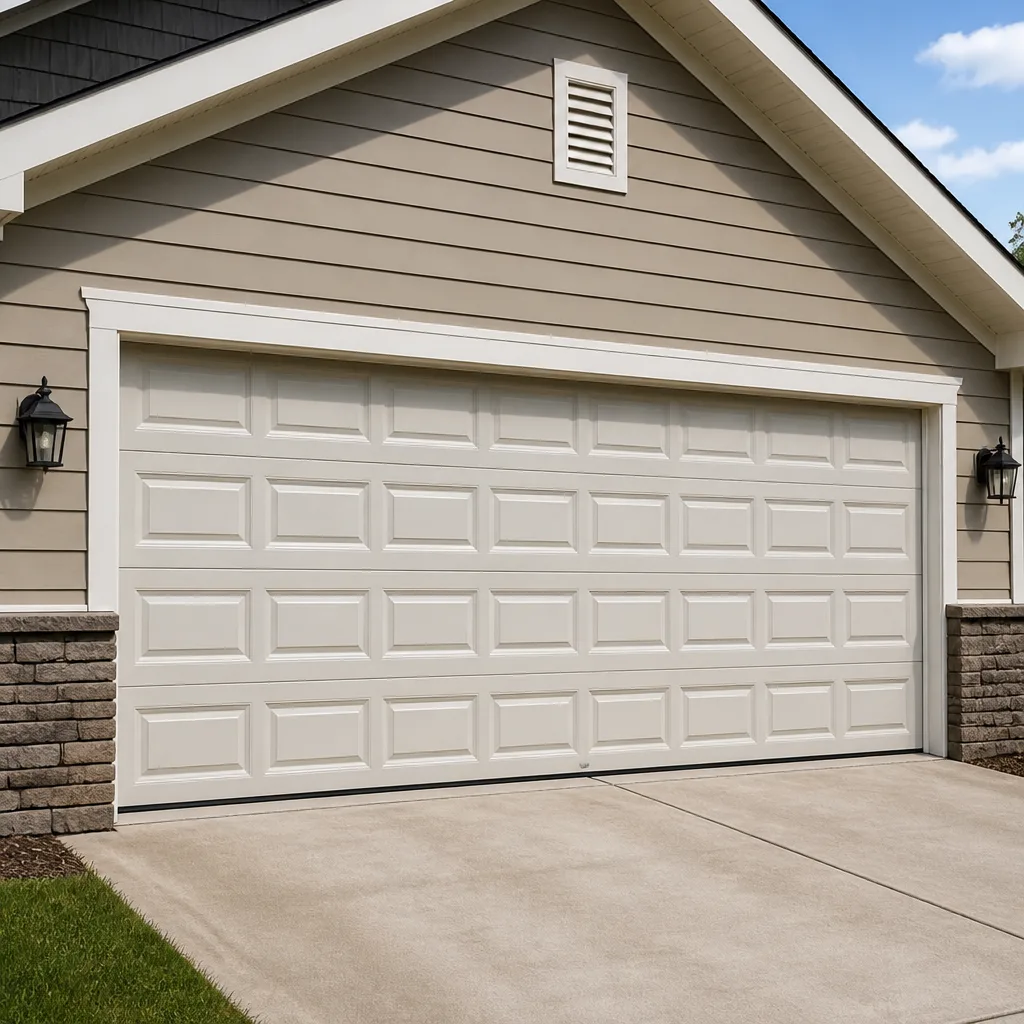 Raised-panel steel
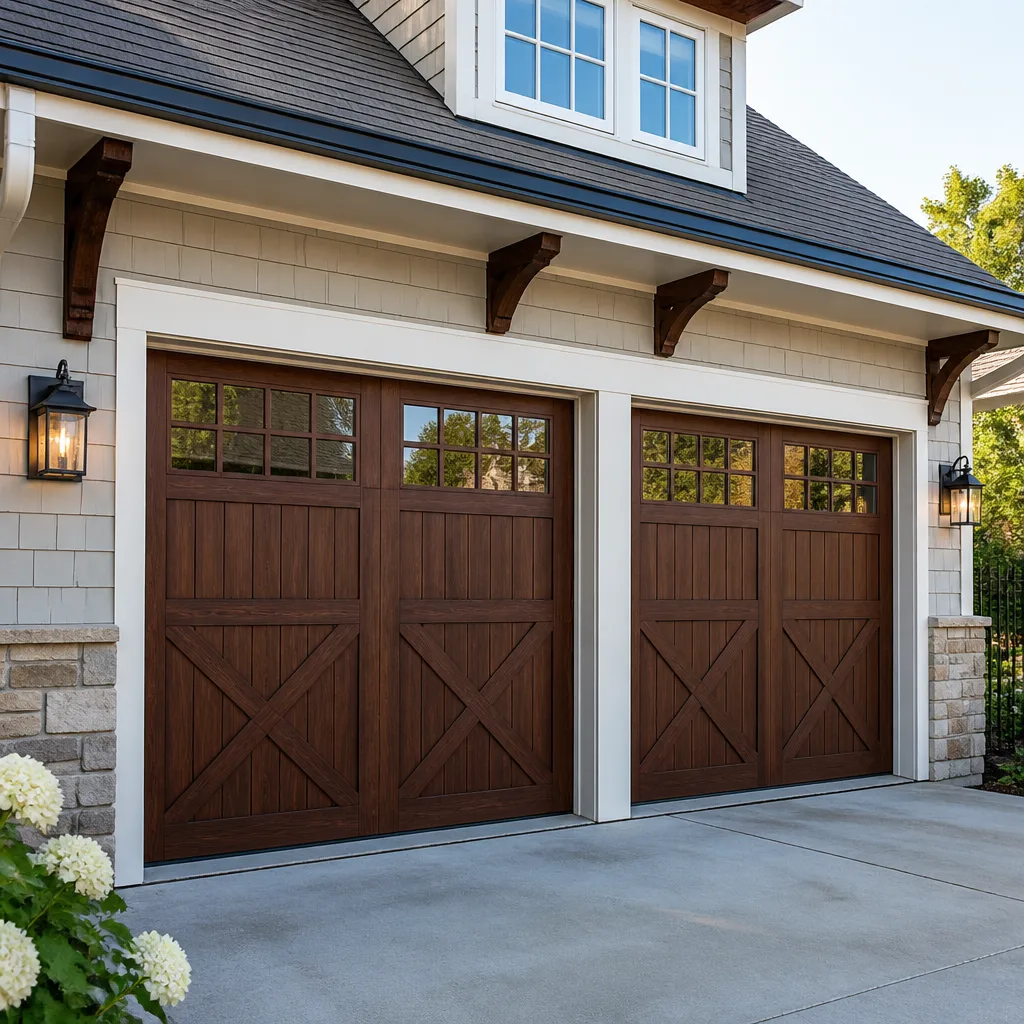 Carriage house
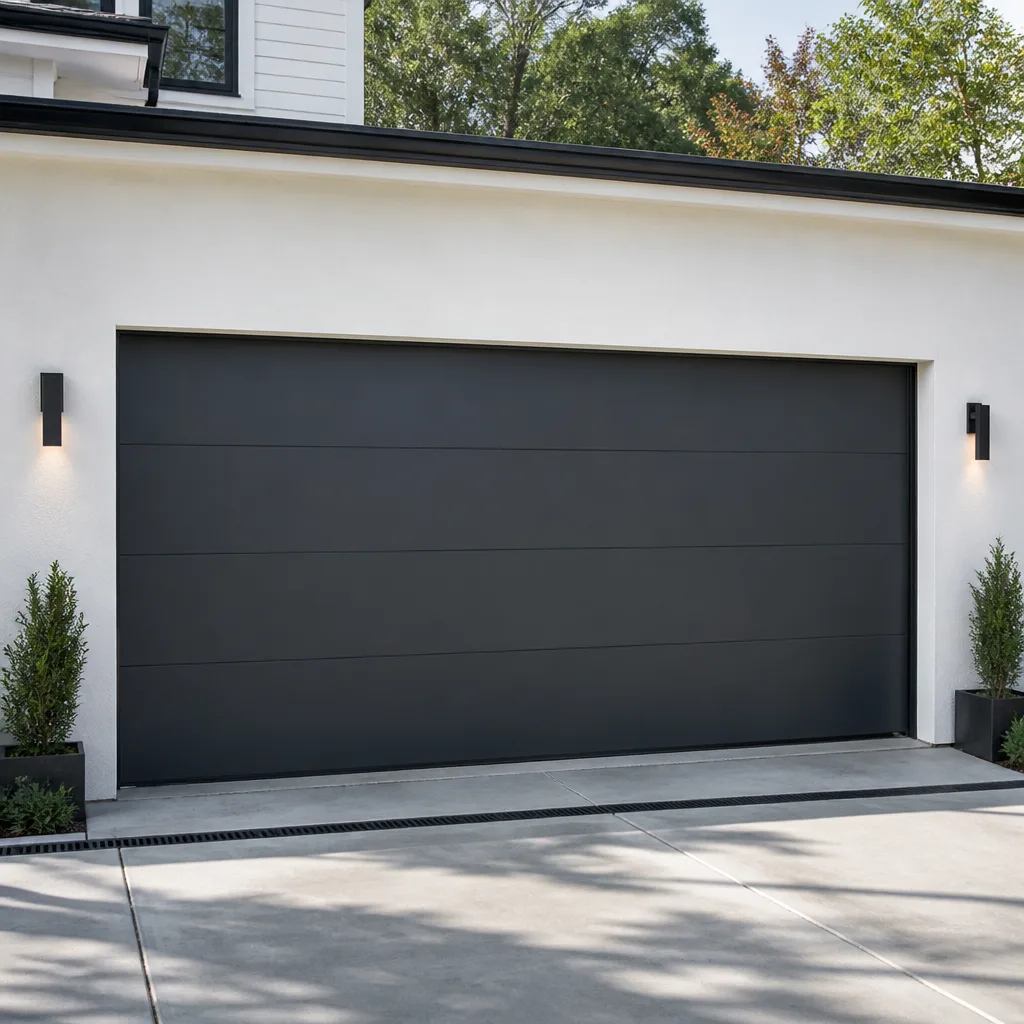 Modern flush
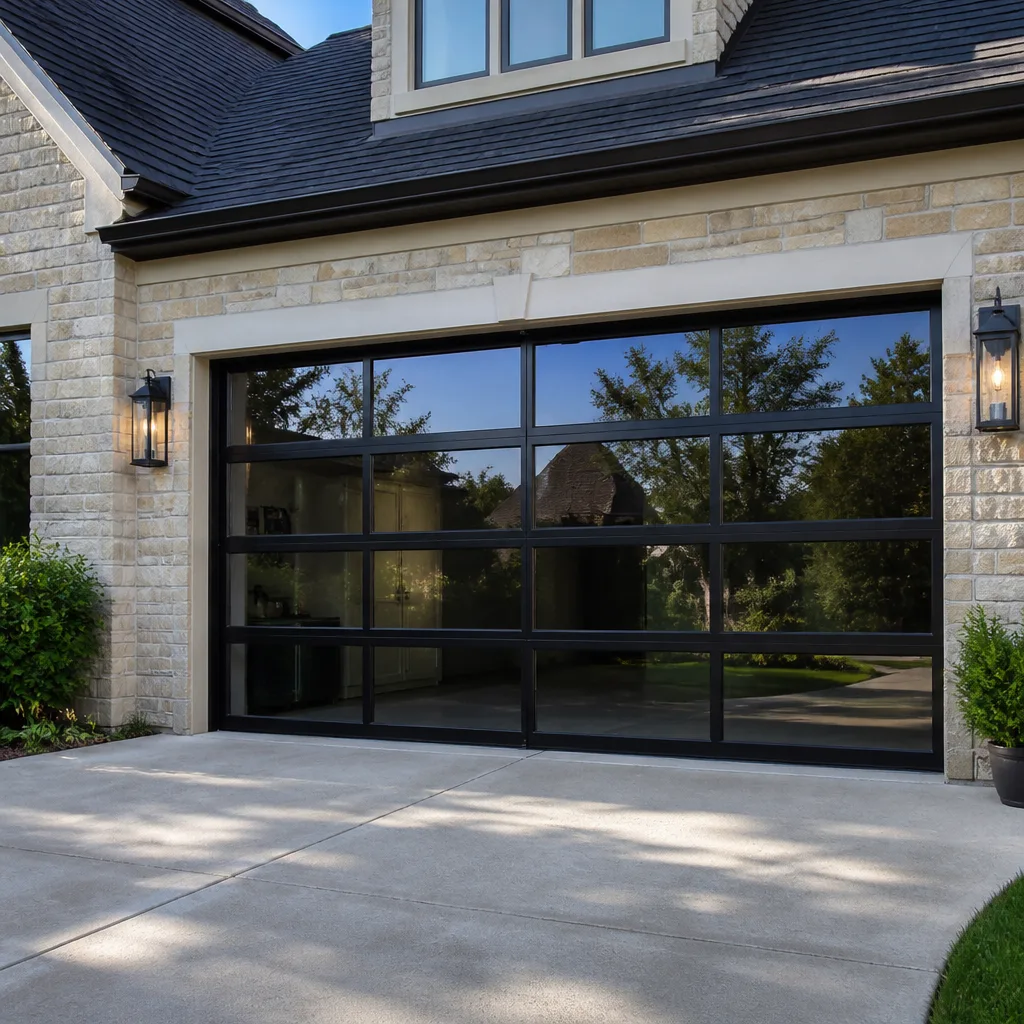 Full-view glass
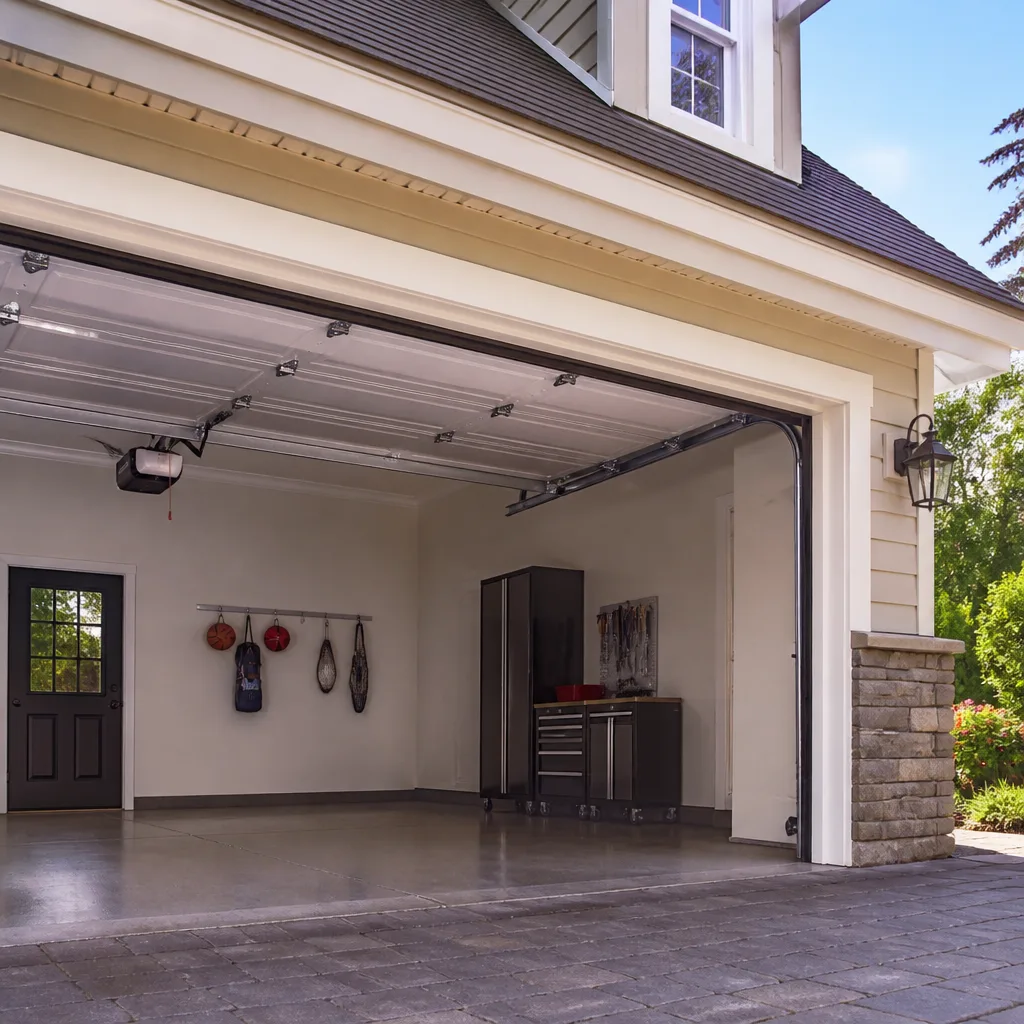 LiftMaster openers
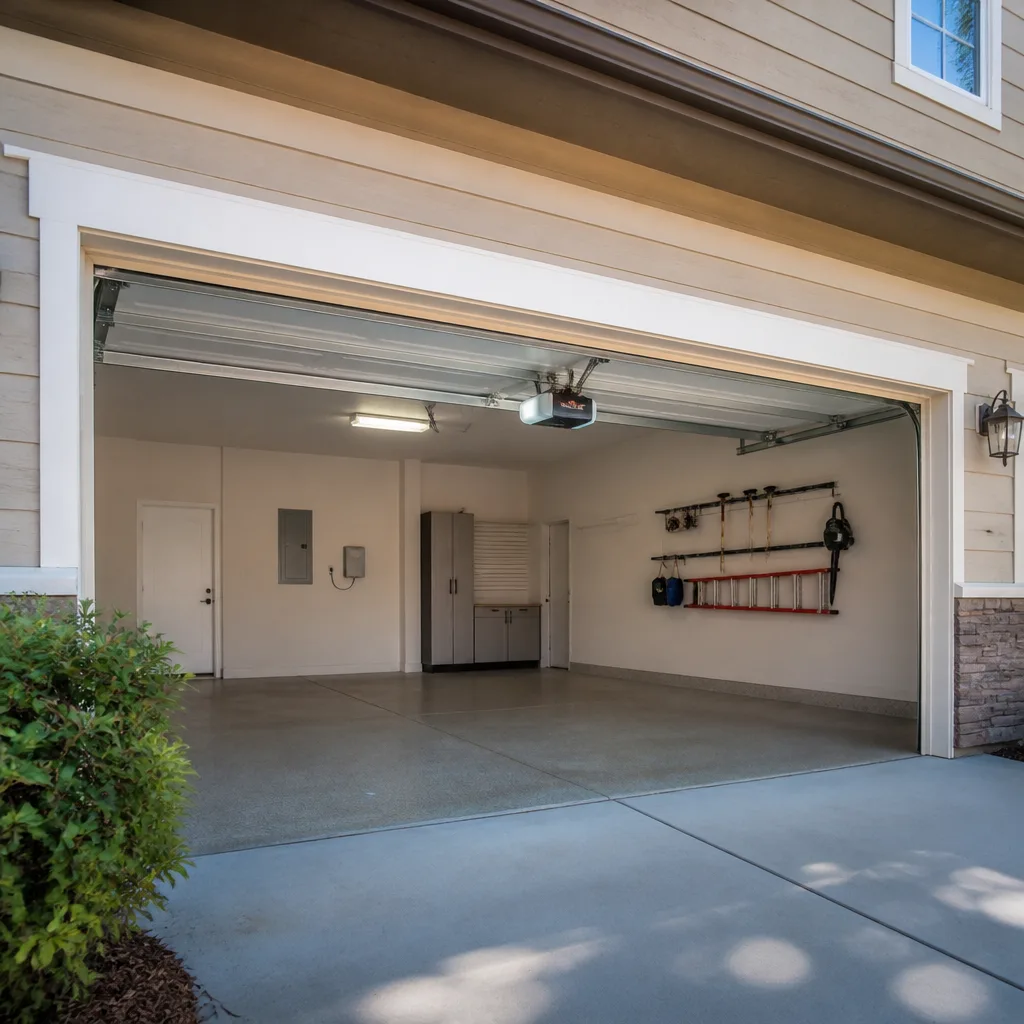 Chamberlain openers
Full 25-point door and opener safety check with every visit - springs, cables, rollers, tracks, and your LiftMaster or Chamberlain opener included
You get a price before we start. It does not change when the pro arrives.
Get your free estimateThe Complete Guide to Garage Doors in Huber Heights
Most garage door guides are written for a national audience that doesn’t exist. They describe a generic door on a generic house in a generic climate, and they leave you to figure out the rest. Here’s the thing about Huber Heights: a large share of the homes here went up between the 1970s and 1990s, which means many garage doors are still running on hardware that was never built to last this long. Original springs, original openers, original tracks. That changes what fails, when it fails, and what makes sense to fix versus replace. This guide walks through all of it: the brands already in your garage, how freeze-thaw cycles and Ohio humidity wear on door components, when repair beats replacement, and the permit and HOA questions to sort out before you buy a new door.
Quick Answer
The right garage door strategy in Huber Heights comes down to age and hardware. If your door is under roughly fifteen years old and only the spring, opener, or rollers have failed, a repair with brand-correct parts is almost always the better call. If the door itself is original to a 1970s or 1980s build and you’ve paid for two or more repairs already, a full replacement usually costs less over the next decade than piecemeal fixes. Either way, the price should be quoted and agreed before any work starts.
Styles & brands we work with
- Raised-panel steel
- Carriage house
- Modern flush
- Full-view glass
- LiftMaster openers
- Chamberlain openers
Table of Contents
- How Huber Heights Housing Stock Shapes Your Garage Door
- How Local Climate Wears on Garage Doors
- The Brands Already in Your Garage (and Why It Matters)
- Repair or Replace? A Practical Decision Guide
- What “Full-Service” Really Means
- Permits and HOA Rules in Huber Heights
- What to Do When the Door Won’t Open
- What Garage Door Work Typically Costs
- Common Mistakes to Avoid
- When to Call a Professional
- Frequently Asked Questions
How Huber Heights Housing Stock Shapes Your Garage Door
Huber Heights grew fast in the 1970s and 1980s, and a lot of that building was single-family homes with attached two-car garages. The garage door on those houses was typically a steel or wood panel door with a torsion or extension spring system and a chain-drive opener. That hardware was designed for a service life of maybe fifteen to twenty years. If the door was never replaced, the spring has been replaced once or twice already and the opener is on borrowed time.
What does that mean for you today? A few practical things:
- Spring types are mixed. Older homes often have extension springs mounted above the tracks, while homes built from the late 1980s onward more often use torsion springs on a shaft above the door. Both fail with age, but they fail differently and take different replacement parts.
- Opener models are dated. Early chain-drive units from well-known brands are common in Huber Heights garages. Many still work. Some lack modern safety reversing features, which is a real concern in a house with kids or pets.
- Panel styles are simpler. If you’re replacing a door on a home from this era, the recessed-panel and short-raise styles typical of Clopay and Amarr lines match the housing stock well and stay in production, so parts are easy to source.
- Retrofit is routine. Because so many homes here share the same era of construction, converting an extension-spring system to torsion or swapping a chain-drive opener for a belt-drive Chamberlain is a normal, well-understood job.
If you’re staring at a door that’s older than you are, this is the section that matters most. The condition of the hardware tells you what’s coming next: a spring that’s near the end of its cycle count, an opener motor that’s overheating on the up-travel, a track that’s been bent back into shape one too many times. Repairs are still very much worth doing, but knowing the era helps you plan.
How Local Climate Wears on Garage Doors
Huber Heights sits in a part of Ohio that sees hard freeze-thaw cycles every winter. Water gets into seams, freezes overnight, expands, and thaws the next day. Over one season that cycle can do real damage to a garage door, and over ten seasons it will. This isn’t coastal corrosion territory. It’s a winter problem, and it’s the main driver of what fails here.
Where the climate shows up first:
- Bottom seals and weatherstripping crack and stiffen from the cold, then let in water and cold air the following spring. A worn seal is one of the cheapest fixes and one of the most ignored.
- Steel doors with a factory finish develop rust at panel seams and along the bottom rail where road salt and slush collect. Once rust starts at a seam it spreads under the finish.
- Wood doors swell in humid summer months and shrink in dry winter air. That movement stresses joints and paint, and it’s why wood needs more upkeep than steel or aluminum here.
- Springs and cables work harder in cold weather because the metal gets stiffer and the door gets heavier to lift. Cold snaps concentrate spring failures into the same few weeks each year.
- Opener gears and lubrication thicken in the cold. A chain-drive opener that runs fine in July can sound labored in January if it hasn’t been maintained.
What holds up best in this climate? Insulated steel doors from Clopay or Amarr handle freeze-thaw better than most alternatives because the steel skin and polyurethane core don’t absorb moisture the way wood does, and the insulation keeps the garage warmer so the door moves more easily on cold mornings. Aluminum and composite doors also do well. Wood is the material that asks the most of you here.
One specific maintenance habit makes a difference in Huber Heights: clear slush and salt from the bottom rail after a storm, and check the seal every fall before the first hard freeze. That one routine cuts down on winter repair calls more than anything else.
The Brands Already in Your Garage (and Why It Matters)
Brand fluency is not marketing. It’s repair math. A technician who has worked on the specific opener in your garage knows the motor’s failure points, the gear set, the logic board layout, and which safety sensor pairing it uses. That saves diagnostic time and, more importantly, means the part that goes back in is the part that belongs there.
We work on the brands homeowners here already own. That includes four opener manufacturers and four door manufacturers:
- Openers: LiftMaster, Chamberlain, Genie, and Craftsman. These cover the vast majority of residential openers in Huber Heights, including the chain-drive and belt-drive units from the 1980s and 1990s that are still running in a lot of garages.
- Doors: Clopay, Amarr, Wayne Dalton, and Raynor. Panel profiles, track gauges, and spring hardware differ across these four, and a door from one brand takes parts that don’t cross over from another.
Here’s a scenario that comes up constantly. The opener dies and the spring fails inside a month of each other. Two separate service calls, two separate companies, two separate schedules. We handle both under one roof, so one visit fixes both problems and you’re not coordinating between an opener guy and a door guy. On older doors, a spring failure can actually be the reason the opener died: the motor fought a door it couldn’t lift. If you only replace the opener, the new one fails too.
Brand-specific knowledge matters most when the brand has been out of production. Some Genie and Craftsman models still in homes here have limited parts support, and knowing which replacements interchange is the difference between a working door this week and another week of waiting. If you already know the brand of your door or opener, tell us when you call. If not, we identify it on arrival.
Repair or Replace? A Practical Decision Guide
This is the question homeowners ask us most, usually after a big repair quote. The honest answer depends on door age, repair history, and whether the underlying structure is still sound. Here’s how to think it through.
Repair is usually the right call when:
- The door is under roughly fifteen years old.
- Only one component has failed: a spring, a cable, a roller set, an opener.
- The panels are intact and the door is still reasonably weather-tight.
- This is your first or second repair since the door was installed.
- The spring or opener problem is isolated and everything else looks healthy.
Replacement usually makes more sense when:
- The door is original to a pre-1990 home and has been through multiple repairs.
- The panels are rusted through at seams, dented, or out of production so they can’t be matched.
- The structure has failed: bent track, a torsion tube that’s cracked, or a bottom section that’s rotted.
- You’re facing a spring failure and an opener failure in the same year on the same old door.
- You want the insulation, safety reversing, and quiet operation of a modern system.
A simple rule that works for most Huber Heights homeowners: if a single repair is more than about a third of the cost of a new door, and the door is more than fifteen years old, replacement is worth pricing seriously. When in doubt, get both numbers in writing and compare. Sometimes a repair prolongs a door another five years. Sometimes it’s money into a door that’s going next winter anyway.
For more detail on the repair side, see our garage door repair page, which lays out the most common jobs and what drives the estimate.
What “Full-Service” Really Means
Most garage door companies specialize in one thing. A one-trade installer sells new doors and wants nothing to do with a snapped spring at seven in the morning. An opener shop swaps openers and leaves the door hardware to someone else. When a problem crosses trades, you end up in the middle of it, calling different companies and coordinating schedules.
Full-service means the same company handles every garage door need you’re likely to face:
- Spring repair, including torsion and extension systems. Springs are what we do, not something we “also handle.”
- Opener repair and replacement across LiftMaster, Chamberlain, Genie, and Craftsman.
- Cable, roller, track, and hinge work.
- Full door installation on Clopay, Amarr, Wayne Dalton, and Raynor products.
- Emergency response when a door won’t open or close.
The reason this matters in practice is overlap. Modern doors almost always fail in pairs. The opener dies because the spring was dragging. The track bends because a roller failed and nobody noticed. The seal rotted because the bottom rail hit ice all winter. A generalist handyman can replace a roller. The company that understands how the parts interact replaces what’s actually broken, not what’s easiest to reach.
We also want you to know what “brand-agnostic” means. We don’t push one manufacturer’s door or one opener brand on every house. We work on the brand already in your garage, which means you’re not replacing a working LiftMaster with a whole new system just because the service company stocks a different brand.
Permits and HOA Rules in Huber Heights
Most cities require a permit for a garage door replacement, and Huber Heights is no different. The rule isn’t universal across every job type, and it depends on whether you’re replacing a door in kind or reworking the opening with new framing or different dimensions. Call the city’s building department before you buy anything, and ask specifically whether your project needs a permit. A short phone call now saves a headache later.
Fire separation is one thing to know about the permit process. If your garage shares a wall with the house, the wall assembly has to maintain its fire rating. A new door doesn’t change that, but if the opening was modified or the existing framing is compromised, the inspector will flag it. Having the framing checked before installation is good practice in Huber Heights homes from the 1970s and 1980s, where header conditions have had plenty of time to settle.
HOA rules are the other piece. Many Huber Heights subdivisions have covenants on garage doors, and they can be more specific than you’d expect:
- Door color and materials, sometimes tied to the original palette of the subdivision.
- Panel style, so replacements match the visual character of the neighborhood.
- Window placement on the door section.
- Insulation and finish type where the HOA requires a certain exterior look.
- Setback or visibility from the street.
Read the covenants before you order. An architectural review committee can reject a door that meets code but doesn’t match the neighborhood standard. That’s an expensive mistake, and it’s avoidable with a five-minute read of your governing documents. Some boards require pre-approval in writing. Get that in hand before the install date.
What to Do When the Door Won’t Open
A dead garage door at the wrong time is stressful. You’re late for work, or the car is trapped, or the door is stuck open and the house is exposed. Here’s the sequence that keeps things safe and gets you a fast repair.
- Don’t force it. A stuck door can be jammed on a broken cable or a snapped spring. Pushing it up manually risks sudden release of stored tension, which is genuinely dangerous.
- Identify the symptom. Does the motor run but nothing moves? Does the door hang halfway up? Did you hear a loud bang from the garage? Each symptom points to a different failure.
- Check the simple stuff. The wall switch, the remote battery, the breaker feeding the opener, and the safety sensor alignment are all worth a quick look before you call. A misaligned sensor stops a door cold.
- Keep the door shut if it’s safe to do so. If the door is on the ground, leave it there. If it’s open and can’t close, secure the house as best you can.
- Call a garage door specialist. We answer 24/7. Fast dispatch from 7am to 7pm, Sunday through Friday. A call outside dispatch hours is booked into the next opening.
Two failures are genuinely dangerous to touch. Snapped torsion springs and loose cables carry enormous stored energy, and a homeowner reaching for either is risking a serious injury. Leave those to a trained technician. The opener, the remote, and the sensors are fine to check yourself.
Emergency work is a core part of what we do. When the door has to open, availability matters more than anything else. The price is quoted and agreed before any work starts, and emergency work isn’t priced higher than scheduled work. It’s a flat quote per job.
What Garage Door Work Typically Costs
Prices vary by door size, brand, and what the door is mounted on. What follows are typical ranges, not exact quotes. The written estimate sets the final price, and it’s agreed before anyone starts.
| Job | Typical Estimate Range |
|---|---|
| Spring repair (one spring) | $180 – $340 |
| Matched spring pair (both replaced together) | About twice the single-spring range |
| Cable replacement | $120 – $250 |
| Roller replacement (set) | $90 – $180 |
| Bottom seal and weatherstripping | $80 – $200 |
| Opener repair | $120 – $350 |
| Opener replacement | $280 – $700 |
| Full door installation | $900 – $2,800 |
| Emergency callout | Quoted at the same rates as scheduled work |
A few things to know about the numbers above. The spring line is for one spring, and springs are usually replaced in matched pairs. A pair is about twice the single-spring price, and that’s the number most homeowners actually pay. The door installation range covers the door, hardware, and labor. It doesn’t include any permit fee the city charges, which you’ll pay the city directly, and it doesn’t cover HOA pre-approval or any architectural review cost.
For a full look at what spring repair involves, the parts, and what factors move the price, see our garage door spring repair page.
We don’t charge a service-call fee, and estimates are free. Call (877) 492-2032 for a written quote. We answer 24/7.
Common Mistakes to Avoid
- Replacing the opener when the spring is the problem. If the motor is running but the door isn’t moving, or the opener dies within a few months of a new install, the spring was probably the root cause. Fix the door first, then the opener.
- Ignoring a small seal problem through winter. A worn bottom seal lets water and cold air in, and slush collects at the bottom rail. By spring you’re looking at rust and a swollen bottom section. Replace the seal before the first hard freeze.
- Buying a door without checking HOA covenants. Many Huber Heights subdivisions have written rules on door style, color, and material. An architectural review rejection after the door is ordered is expensive and avoidable.
- Relying on a single past repair as evidence the door is fine. A house from the 1980s has gone through plenty of winters. One replaced spring doesn’t mean the other one, the cables, and the rollers aren’t near the end of their service life.
- Choosing a door material that fights the local climate. Wood looks great, but in Huber Heights it demands more maintenance than insulated steel or aluminum because of the freeze-thaw and humidity swings. Pick the material that suits the climate, not just the photo on the showroom wall.
- Letting one company replace the spring and another install the opener. The parts interact, and the two trades need to coordinate. One specialist handling the whole job means both components are matched to the door.
- Assuming a permit is not required. Codes vary, but most cities in this region require one for a door replacement. A quick call to the Huber Heights building department confirms it before you order anything.
When to Call a Professional
Call a garage door specialist when a spring has snapped, a cable has come loose, or the door hangs unevenly on its track. Those are dangerous jobs and shouldn’t be handled by anyone without training. Call when the opener runs but the door doesn’t move, when the door reverses mid-travel, or when the safety sensors won’t stay aligned. Call when you’re ready to price a new door or a full opener replacement, because both should come with a written quote and a measured installation. For openers specifically, our garage door opener repair page covers the diagnostics and the most common failures.
Garage Door Repair Huber Heights offers free estimates in Huber Heights. Call (877) 492-2032. We answer 24/7, with fast dispatch from 7am to 7pm, Sunday through Friday.
Frequently Asked Questions
Spring repair typically runs $180 to $340 for a single spring, with a matched pair about twice that. Springs are almost always replaced in pairs, so a pair is the number most homeowners pay. The written estimate sets the final price. Call (877) 492-2032 for an exact quote; estimates are free.
Yes, same-day service is available. We answer 24/7, with fast dispatch from 7am to 7pm, Sunday through Friday. A call outside dispatch hours is booked into the next opening. Call (877) 492-2032 and tell us the symptom: motor running but not moving, hanging halfway, or stuck open.
The price is quoted and agreed before any work starts, so the written estimate is what you pay. If we find a different problem on arrival, we’ll tell you and re-quote before doing anything. That’s the point of the written estimate. Call (877) 492-2032 to schedule one.
The local professional we connect you with is licensed and insured as their state requires. Our technicians have up to 14 years of experience across the brands already in your garage. Call (877) 492-2032 to ask for credentials before the visit; we’ll confirm them upfront.
Most cities require a permit for a door replacement, and that includes Huber Heights. The specific rule depends on whether you’re replacing the door in kind or altering the opening, so call the city’s building department first. Have the answer in hand before you order. For the rest of the process, see our garage door repair Huber Heights page.
Yes, we work on the brands already in your garage. That covers LiftMaster, Chamberlain, Genie, and Craftsman openers, and Clopay, Amarr, Wayne Dalton, and Raynor doors. If your system is one of those, we know the parts and the failure points. Call (877) 492-2032 with your brand and symptom, and we’ll confirm before scheduling.
The Bottom Line
Most Huber Heights homes are running garage door hardware older than it was designed to last. The right decision depends on the age of the door, the repair history, and whether the structural components are still sound. Springs and opers overlap more than homeowners expect. Brand matters, climate matters, and permits and HOA rules should be sorted before you order anything. The one rule that holds across every job: the price is quoted and agreed before work starts. If your door is failing, call a specialist rather than a general handyman, and if you’re not sure what’s wrong, describe the symptom and we’ll diagnose it.
Ready to get a written quote? Call (877) 492-2032. We answer 24/7. Fast dispatch from 7am to 7pm, Sunday through Friday.
Written by the team at Garage Door Repair Huber Heights.
See the difference
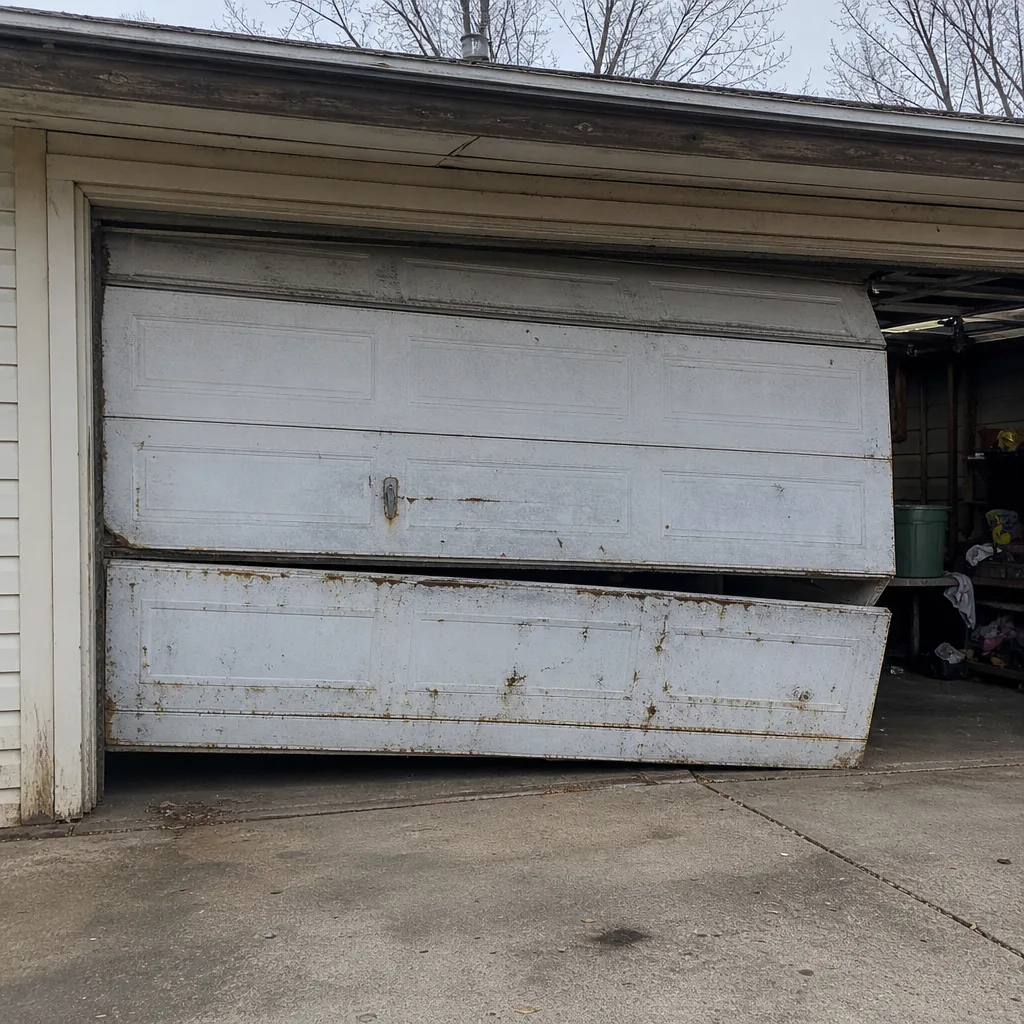 Before
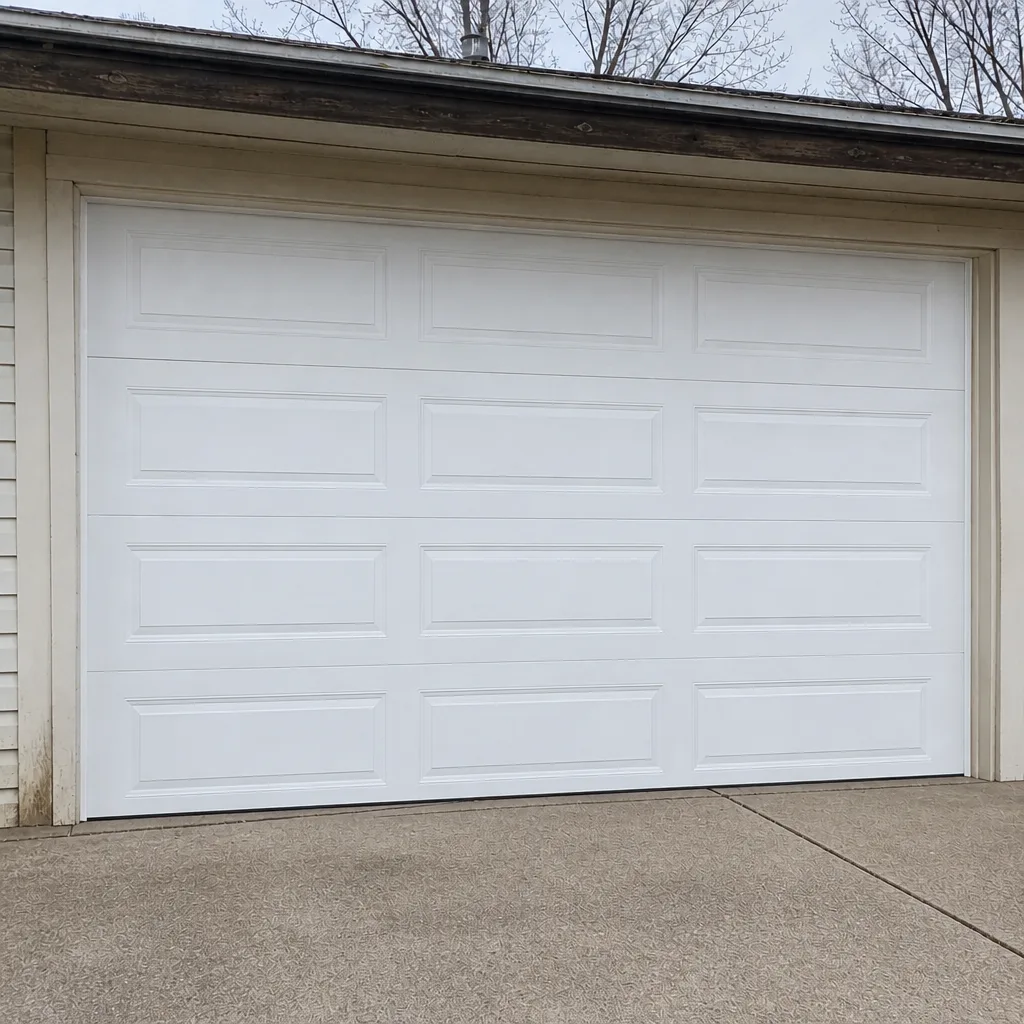 After
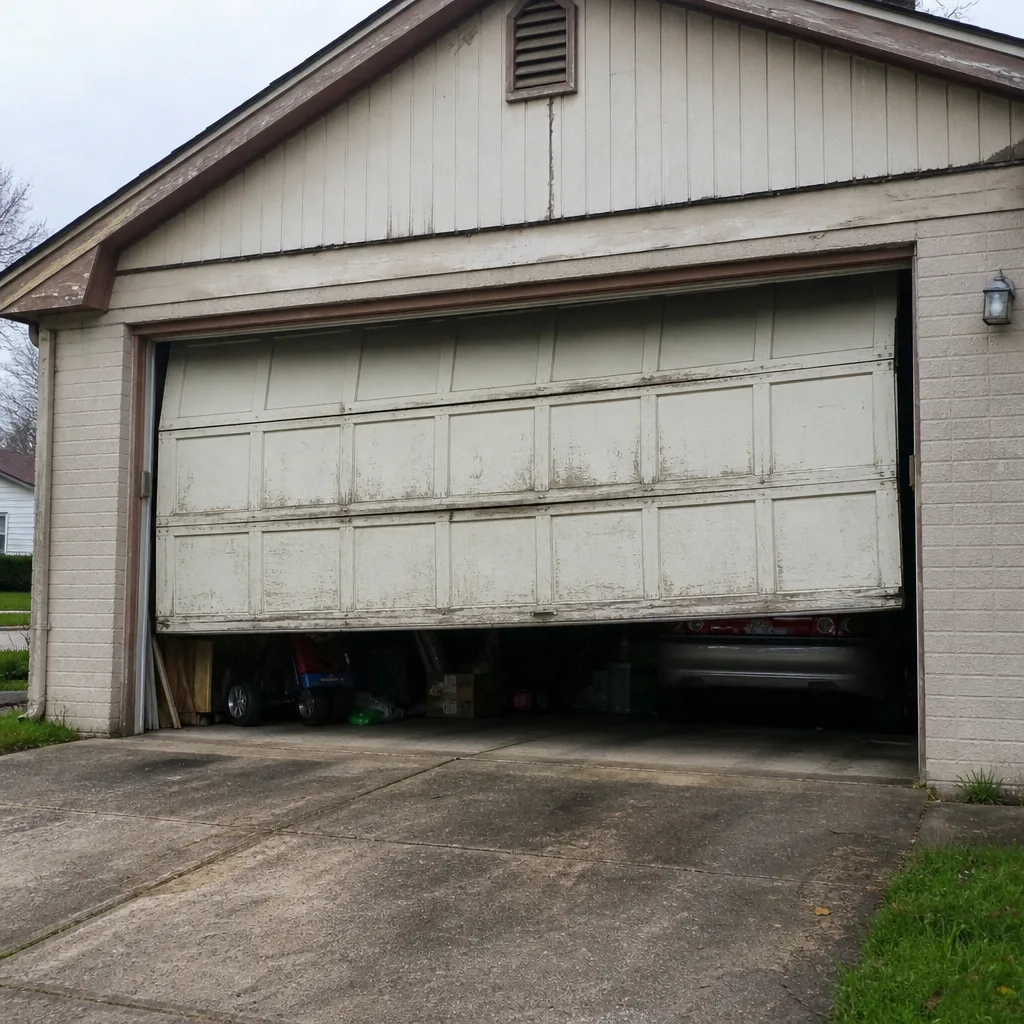 Before
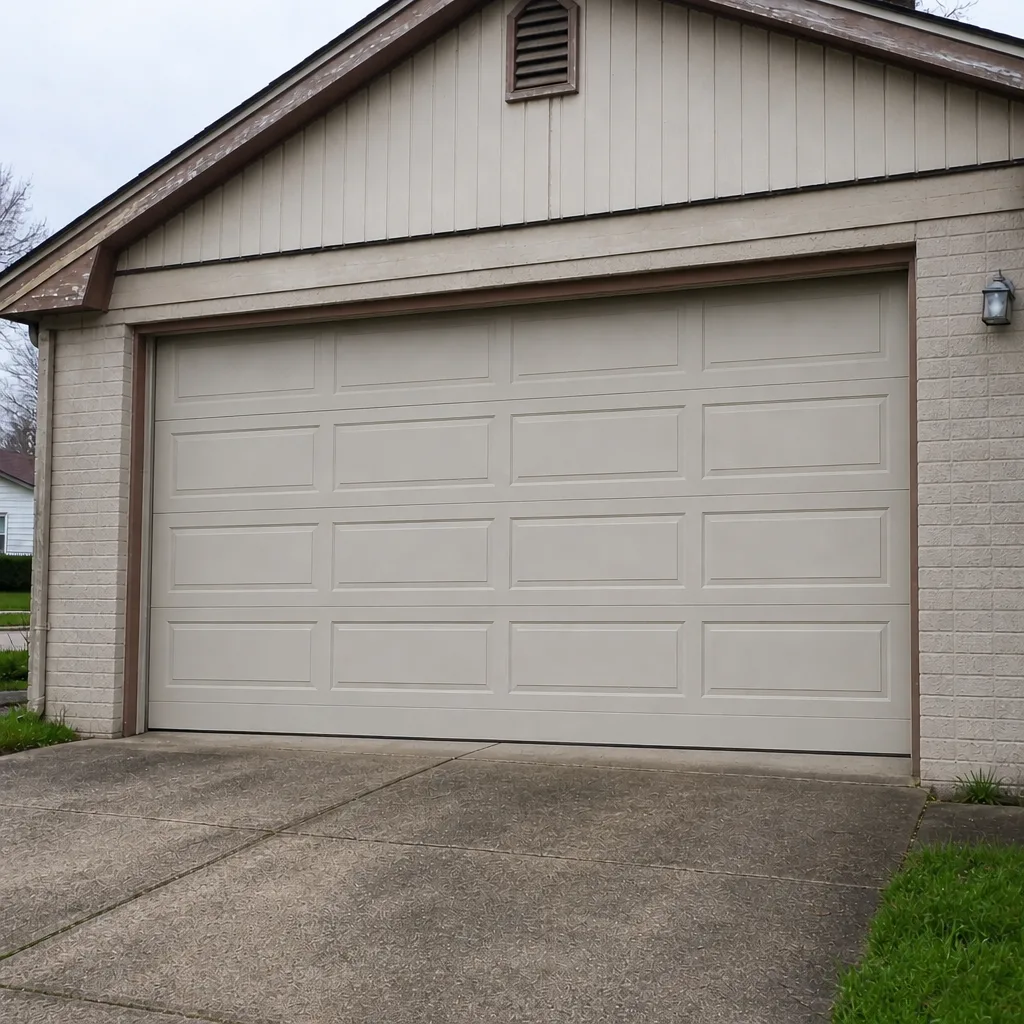 After
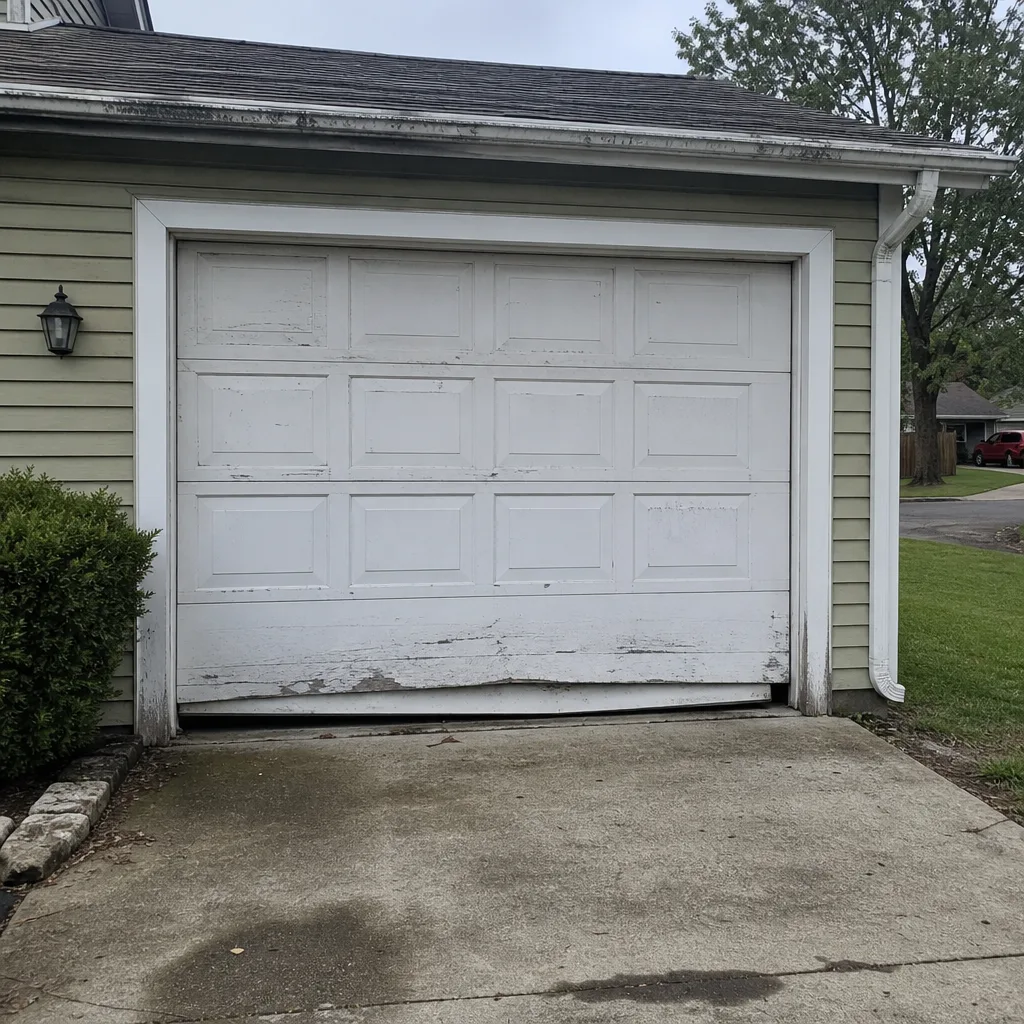 Before
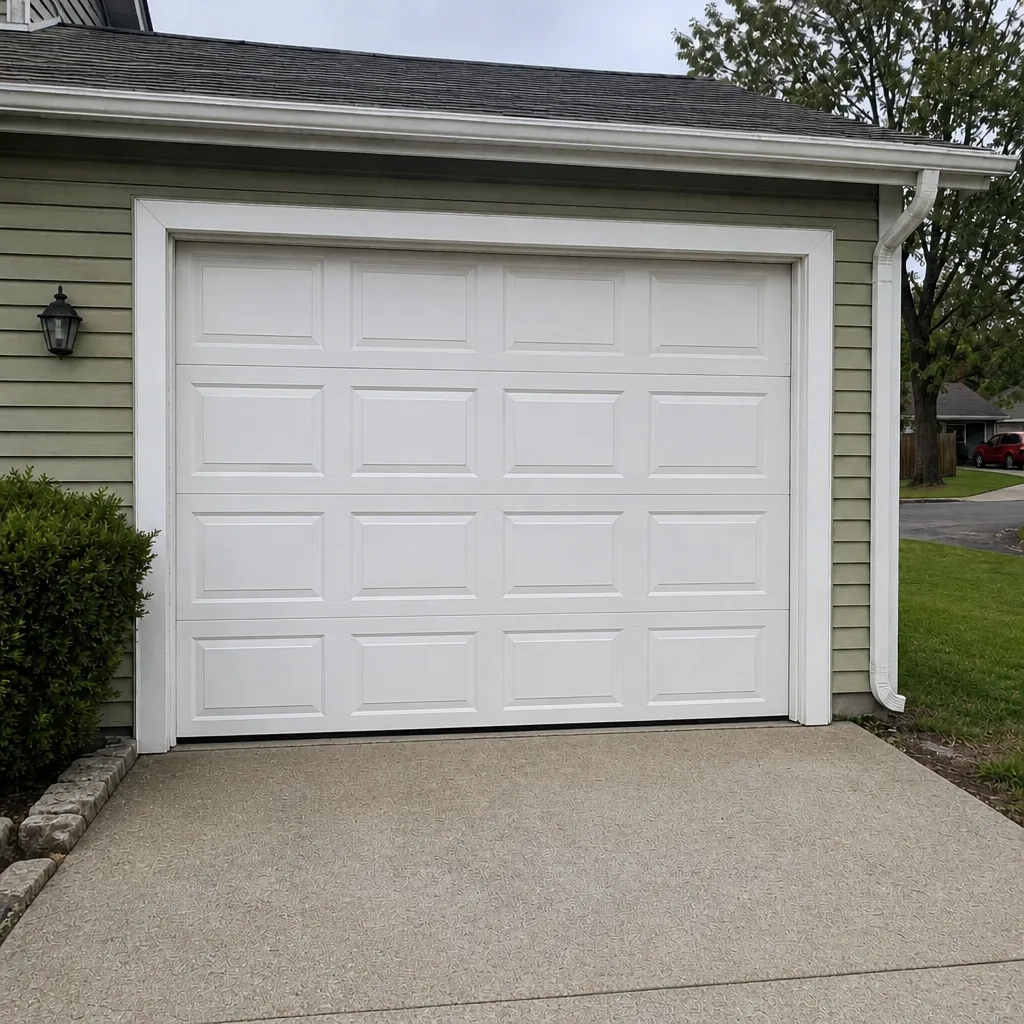 After