
Last updated November 22, 2026
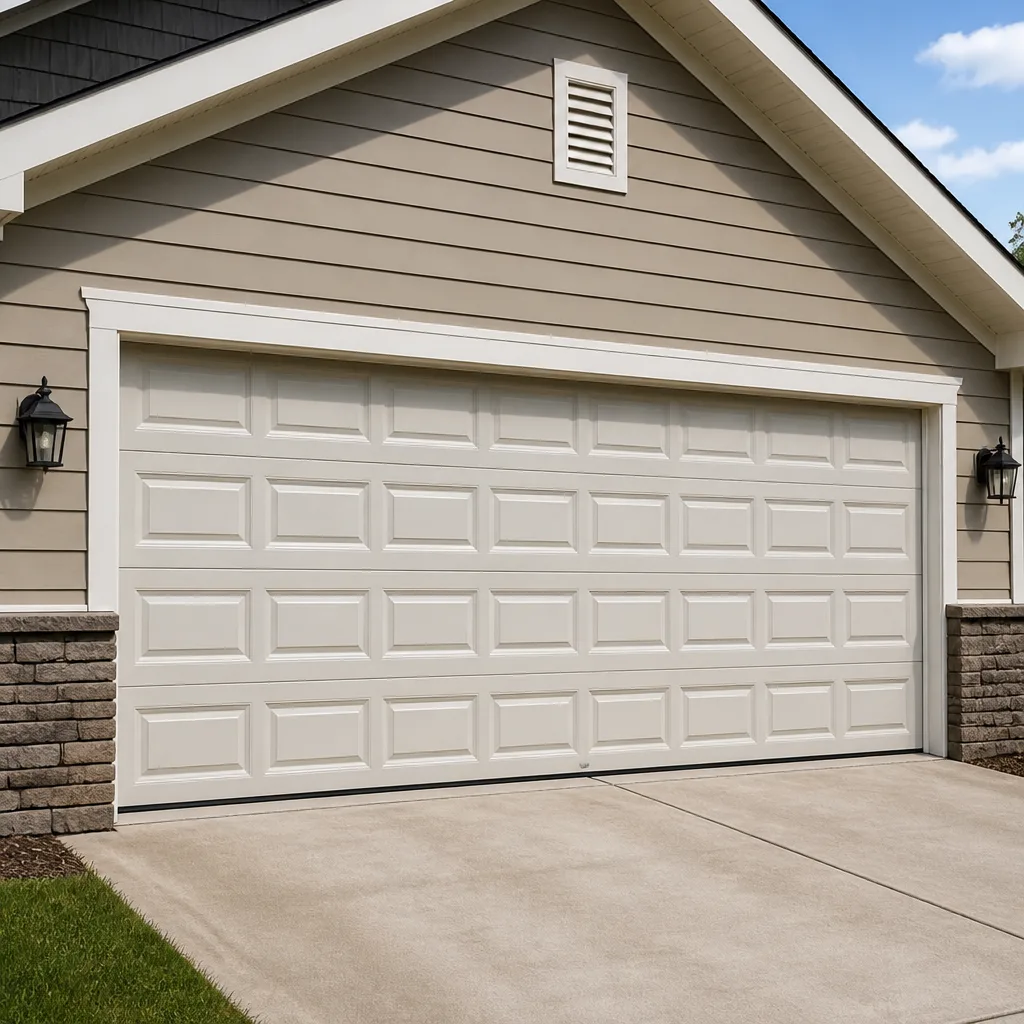 Raised-panel steel
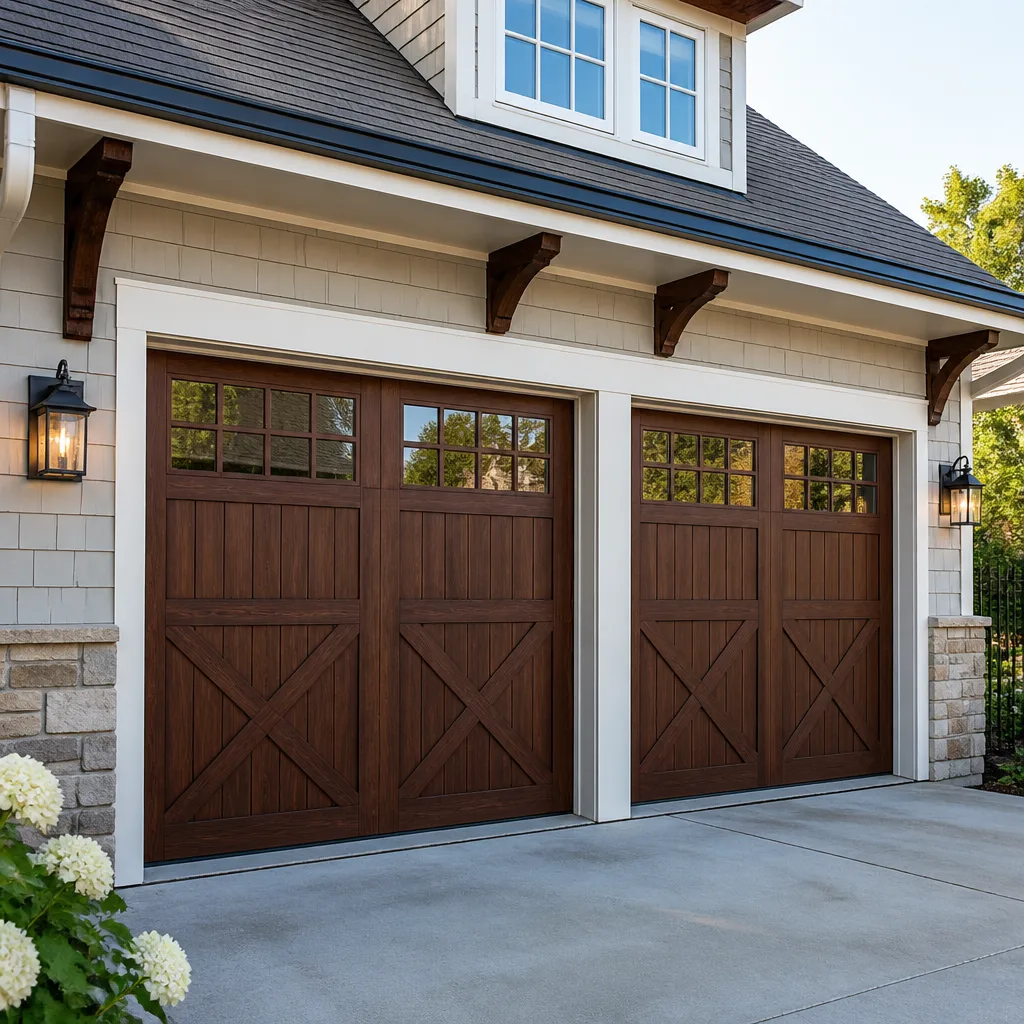 Carriage house
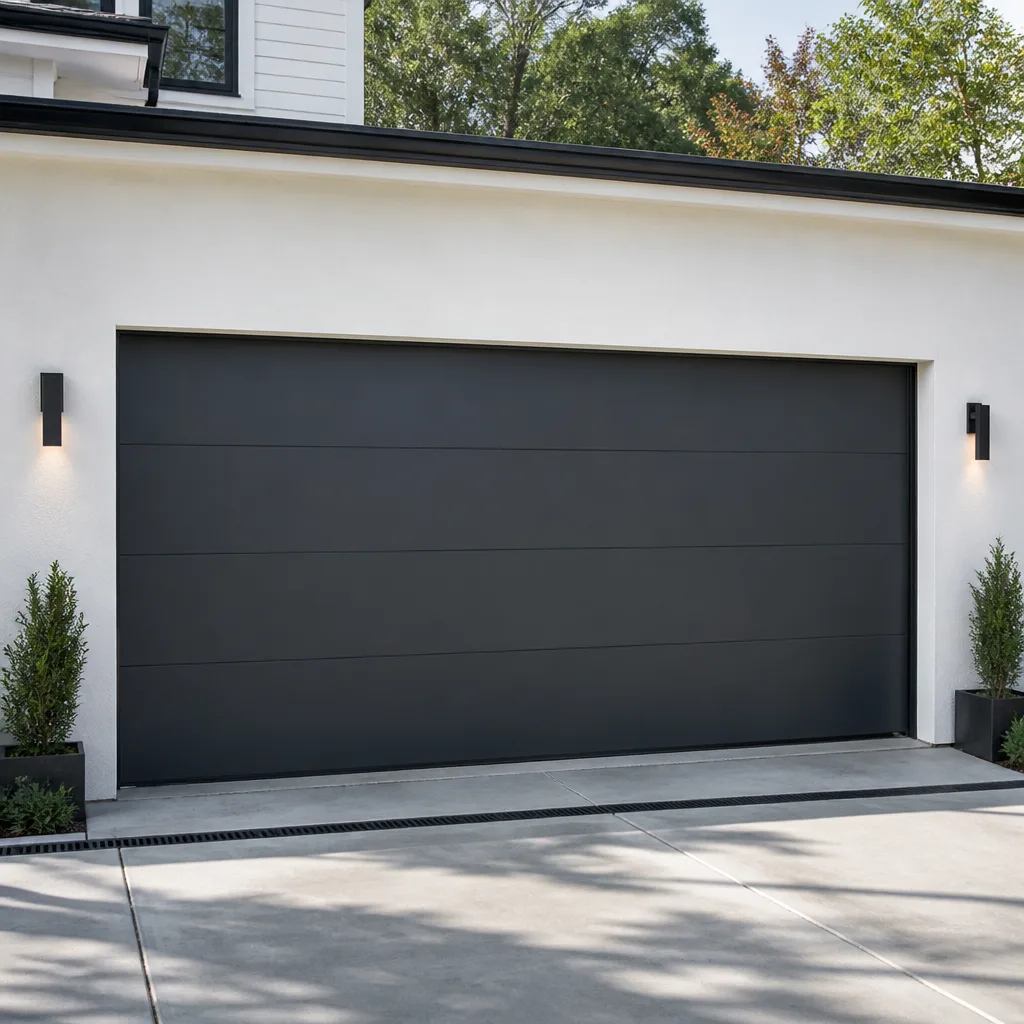 Modern flush
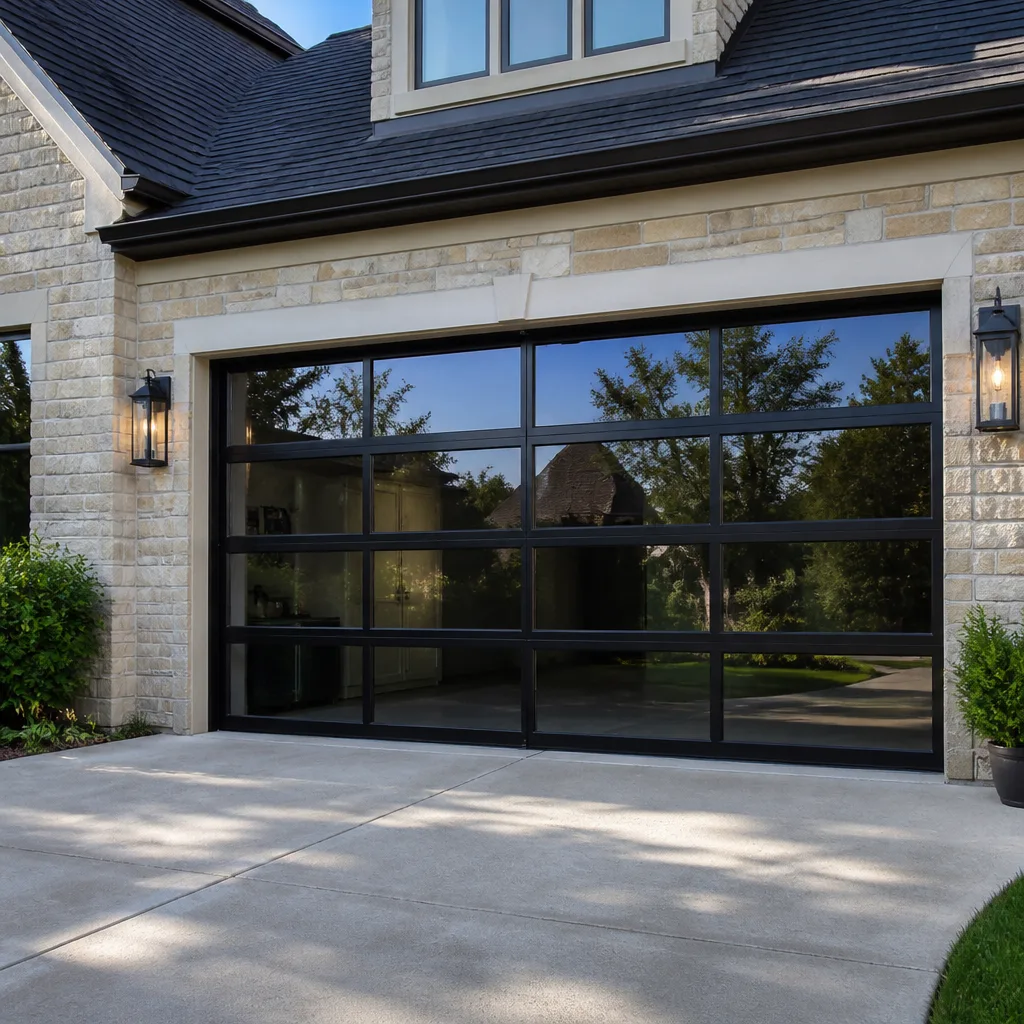 Full-view glass
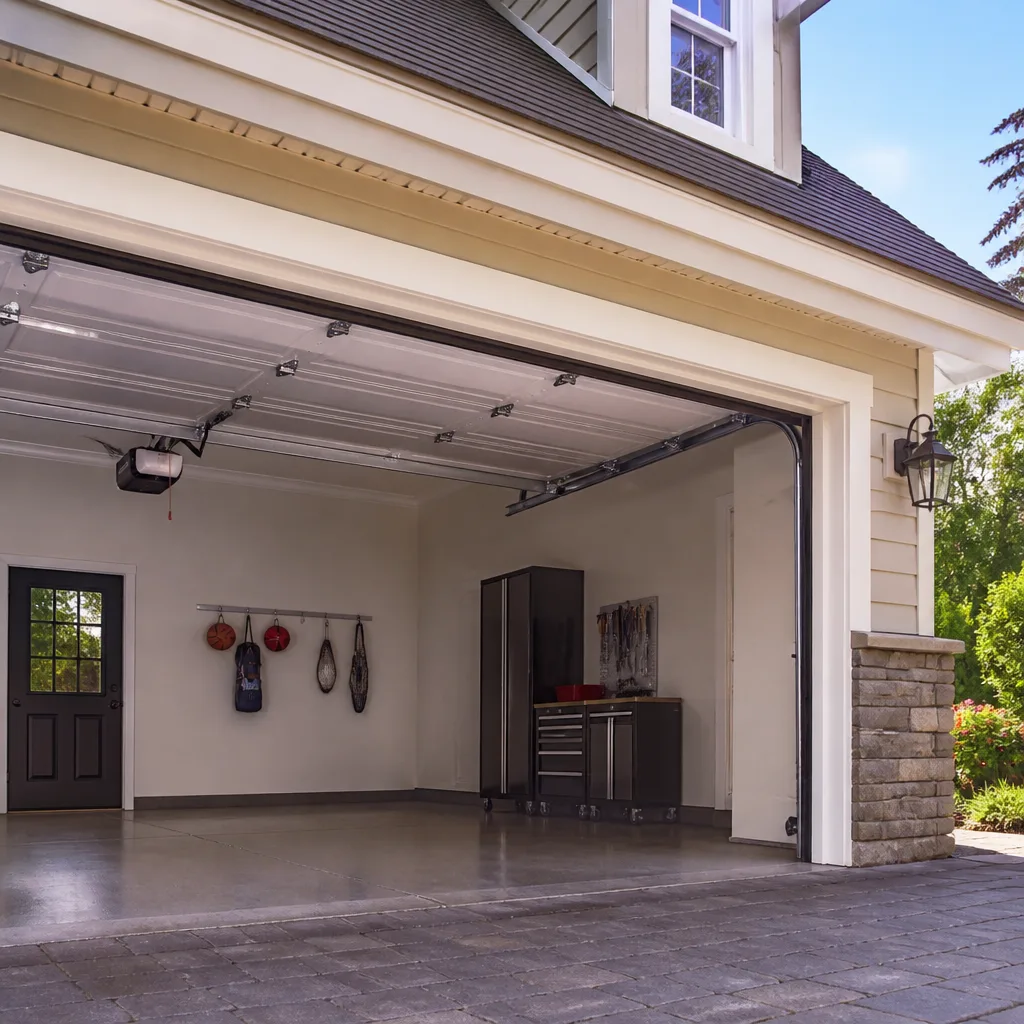 LiftMaster openers
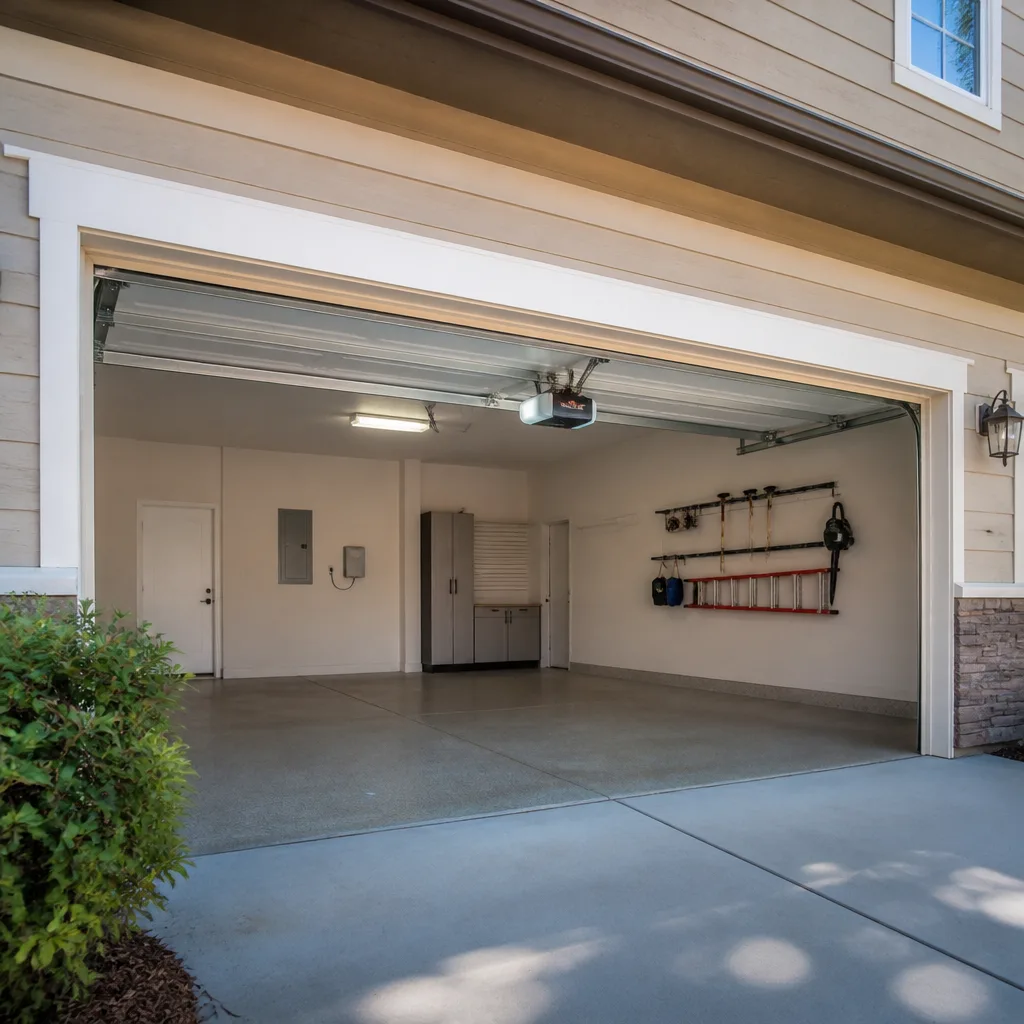 Chamberlain openers
Full 25-point door and opener safety check with every visit - springs, cables, rollers, tracks, and your LiftMaster or Chamberlain opener included
You get a price before we start. It does not change when the pro arrives.
Get your free estimateDIY vs Professional Garage Door: The Huber Heights Homeowner’s Decision Guide
Torsion springs store enough mechanical energy to cause serious injury in a fraction of a second, and calling a service is not what makes this work dangerous. People hurt themselves every year after watching a video, buying the winding bars, and assuming the tool is the safety system. It isn’t. The thing that keeps a technician safe is knowing where the load is, how it releases, and what the door does if a cable slips while the spring is under tension. This guide sorts every garage door job into one of two piles: genuinely safe to handle yourself, and genuinely not. You’ll learn which tasks are cheap and low-stakes, which ones carry real physical risk or liability exposure, and how to diagnose a problem in Huber Heights so you can describe it clearly before anyone quotes you a price.
Quick Answer
Most garage door work divides cleanly: weatherstripping, lubrication, sensor alignment, remote programming, and visual inspections are safe and cost-effective to do yourself. Torsion springs, cable drums, and structural panel replacement are not, because the stored energy and the liability fall on whoever performed the work. Anything involving the spring system or a bent track should go to a trained technician.
Styles & brands we work with
- Raised-panel steel
- Carriage house
- Modern flush
- Full-view glass
- LiftMaster openers
- Chamberlain openers
Table of Contents
- What’s genuinely safe to DIY on a garage door
- What you should never attempt yourself
- The real cost of a DIY repair gone wrong
- Ohio liability: who performed the work matters
- How to diagnose your door before you call
- Step-by-step: the DIY jobs worth doing
- When to call a professional instead of pushing further
What’s genuinely safe to DIY on a garage door
The safe-to-DIY list is shorter than most homeowners expect, but the items on it are real. None of them involve the spring system, the cables, or anything under mechanical tension. If a task requires you to release tension, lift the door off its weight, or work above your head near a wound spring, it doesn’t belong here.
Here’s what falls into the safe category:
- Weatherstripping replacement. The rubber or vinyl seal along the bottom of the door and around the frame is the most homeowner-friendly repair on the whole door. It pulls out of its channel and slides back in. It’s also the repair that matters most in a climate like Huber Heights, where a hot, humid summer and a cold, wet winter work the seal hard in both directions.
- Lubrication. Hinges, rollers, and the opener’s chain or screw drive take a garage-door-rated lubricant once or twice a year. This is the single cheapest thing you can do to extend the life of the door.
- Safety sensor alignment. The two small eyes near the floor on either side of the door need a clear line of sight and a clean lens. A broom handle, a rag, and a screwdriver handle most sensor issues.
- Remote and keypad programming. Pairing a new remote to a LiftMaster, Chamberlain, Genie, or Craftsman opener is a button-press sequence. Every manufacturer publishes it, and the opener itself walks you through most of it.
- Visual inspection. Looking at the door and listening to it is free. Catching a fraying cable or a worn roller early is the point of this guide.
Notice what’s missing: springs, cables, tracks, panels, and the opener’s internal gears. Those are professional work, and the next section explains why. If you’ve already moved past the DIY list and the door is stuck right now, our Garage Door Repair Huber Heights page is where the repair conversation starts.
What you should never attempt yourself
Torsion springs and cable drums are the two jobs that cause the injuries. A torsion spring on a standard residential door is wound to a specific number of turns and holds the entire weight of the door in balance. Loosening the set screws without the spring unwound correctly turns a controlled load into a fast, violent release. The winding bars aren’t what protects you; understanding the load and the sequence is the protection. We’ve seen what happens when that sequence is skipped, and it’s the one repair where we tell homeowners plainly: don’t.
The never-DIY list:
- Torsion and extension spring replacement or adjustment. Both types store energy. Both cause injuries. This is a named, dedicated repair for a reason, and it’s the most common failure point on any door. Our garage door spring repair page covers how the load is managed safely.
- Cable replacement and cable drum work. Cables are under the same tension as the springs and can whip when they fail. A cable that looks slack is often the warning sign of a spring that’s already lost tension.
- Track straightening. A bent track looks like a hammer-and-pry-bar job. It isn’t. Forcing a track back into alignment can shift the door’s weight balance and send a panel off its rollers.
- Structural panel replacement. Swapping a section is a precision job. An incorrectly seated panel strains the hinges, the tracks, and ultimately the opener.
- Opener gear and logic board repair. Opening the housing on a modern opener means working near capacitors and a logic board that doesn’t want to be touched unless you’ve done it before.
For anything on this list, the honest move is a call. We answer 24/7, and fast dispatch from 7am to 7pm means a stuck door doesn’t have to sit open all night. If the opener itself is the problem, our garage door opener repair service handles the brands already in your garage instead of guessing at parts.
The real cost of a DIY repair gone wrong
The cost of a botched DIY repair shows up in three places, and only one of them is the parts bill. The first is damaged replacement parts: a spring that gets wound wrong and snaps, a panel that bends when it’s forced, a track that warps when it’s pried. The second is the warranty. Most door and opener manufacturers, including Clopay and Amarr on the door side and LiftMaster and Chamberlain on the opener side, tie coverage to correct installation. A homeowner-installed spring or a self-swapped panel can void the coverage on the component you just touched and, in some cases, on the system around it.
The third is the one that surprises people: the service call that ends up costing more than the repair would have. When a DIY attempt stops halfway, a technician doesn’t just do the original job. They undo the incorrect work first, then do it properly. That’s double the labor on a job that was already priced as one.
A rough way to think about it:
- Weatherstripping done yourself: cost of the seal, a few minutes, no risk. Worth it.
- Sensor alignment done yourself: free. Worth it.
- Spring replacement done yourself: the price of a spring plus the risk of injury plus the cost of a technician finishing what you started. Not worth it at any price.
Repair pricing in Huber Heights is set per job by a written estimate, and the estimate is free. That means you can find out what a professional repair costs before you decide whether DIY is worth the gamble. In most cases, the written number is a lot closer to the DIY parts cost than people assume, and the difference is the labor and the liability.
Ohio liability: who performed the work matters
This is the part of the DIY decision that doesn’t show up on a how-to video. When a homeowner-installed system causes property damage or injury, the question your insurer will ask is simple: who performed the work? If the answer is you, the claim can be treated differently than a claim on work done by a trained professional. A door that comes down on a car, a spring that fails and damages the door panel, or an injury to a family member or neighbor all raise the same question, and the person who did the work is the one holding the answer.
There’s a second layer in Ohio, and it’s about disclosure. If you ever sell a house in Huber Heights, a garage door that was repaired or replaced by the homeowner is something a buyer’s inspector will look at closely. A professional repair leaves a paper trail: the estimate, the invoice, the record of what was replaced. That record is what answers the “who did this work” question later on. It also matters if the door is part of a home warranty or a homeowner’s insurance policy that expects maintenance to be documented.
We’re not lawyers and this isn’t legal advice. What we can tell you is what the technician sees when a homeowner-installed spring or a self-bent track fails: a repair that costs more than it would have, and a conversation about coverage that has an uncomfortable answer. The safer path for anything on the never-DIY list is to have the work done by a local professional who is licensed and insured as Ohio requires, and who can hand you a written record of the job.
How to diagnose your door before you call
A clear diagnosis is the best protection against an inflated quote. When you can tell a technician exactly what the door is doing, what it sounds like, and when it started, you’ve done half the diagnostic work already. It also means nobody has to guess, and guessing is where upselling lives. Here’s how to run the check yourself, safely, without tools under tension.
- Listen from outside the door, not under it. A popping or snapping sound when the door moves usually points to a spring or cable. A grinding sound points to rollers or a track. A clicking sound that repeats is often the opener’s gear or a loose hinge.
- Check the balance with the door at waist height. Disconnect the opener (pull the release handle) and lift the door to about waist height by hand. If it stays where you let go, the spring balance is good. If it drops or floats, the spring system needs attention.
- Look at the cables, don’t touch them. A frayed cable, a cable hanging loose on one side, or a cable that’s come off the drum are all signs of spring trouble. Note it. Don’t try to reseat it.
- Test the safety sensors. Wave a hand or a broom in front of each sensor eye. If the door won’t close, or the opener’s light flashes, the sensor alignment or the lens is the likely culprit, and that’s a DIY fix.
- Check the opener’s light and behavior. A flashing light pattern on a LiftMaster, Chamberlain, Genie, or Craftsman opener is a code, and the manual tells you what it means. Write the pattern down before you call.
- Note the door’s material and brand. A Clopay, Amarr, Wayne Dalton, or Raynor door, or a LiftMaster, Chamberlain, Genie, or Craftsman opener, all have known parts and known failure points. Knowing what you have tells a technician which parts to bring.
Do the check from the ground, with the door disconnected and no tools in your hand near the springs. If anything on the list above looks like spring or cable trouble, stop there. That’s the point at which a professional inspection is the right next step, and it’s free.
Step-by-step: the DIY jobs worth doing
Three jobs are worth doing yourself, and doing them right saves real money over the life of the door. Here’s how each one goes.
Weatherstripping replacement
- Measure the width of the door and the frame, then buy a replacement seal for the bottom and, if needed, the sides.
- With the door closed, pull the old bottom seal out of its channel. It usually slides out from one end.
- Slide the new seal into the channel, working from one end to the other, and trim the excess.
- For side and top seals, remove the old strip from the frame, clean the frame, and press or tack the new one in place.
- Test the door through a full cycle. It should seal without dragging.
Lubrication
- With the door closed, apply a garage-door-rated lubricant to each hinge pivot and each roller stem.
- Run the opener’s chain or screw drive with the lubricant specified for that opener type.
- Wipe off excess. Too much lubricant attracts dust and grit, which wears the rollers faster.
Sensor alignment and cleaning
- Wipe each sensor lens with a dry cloth. A dirty lens mimics a misalignment.
- Confirm both sensors are mounted at the same height and aimed at each other.
- If the door won’t close, loosen the mounting screw slightly and adjust the sensor until its indicator light is steady.
- Test with a broom handle in the beam. The door should reverse.
Programming a new remote follows the same principle as the sensor fix: the opener tells you what it wants. For a LiftMaster or Chamberlain, the pairing button on the motor is the starting point. For a Genie or Craftsman, it’s usually a sequence on the wall control. Either way, it’s a five-minute job and it’s on the safe list.
When to call a professional instead of pushing further
The line between the two lists is clear once you know where it sits. Call a professional when the door won’t balance with the opener disconnected, when you hear a pop or snap from the spring area, when a cable is frayed or off its drum, when a track is visibly bent, or when a panel is cracked or separated. Those are all jobs where the load or the liability makes self-service a bad trade. The other trigger is simply time: if the car is trapped or the door is standing open, the standby cost of waiting is higher than the repair.
Garage Door Repair Huber Heights offers free estimates in Huber Heights. The price is quoted and agreed before any work starts, so there’s no invoice surprise after the technician sees the door. Call (877) 492-2032. We answer 24/7. Fast dispatch from 7am to 7pm, Sunday through Friday. Our technicians have up to 14 years of experience, and they work on the brand already in your garage, so the parts and the diagnosis match the system you own.
See the difference
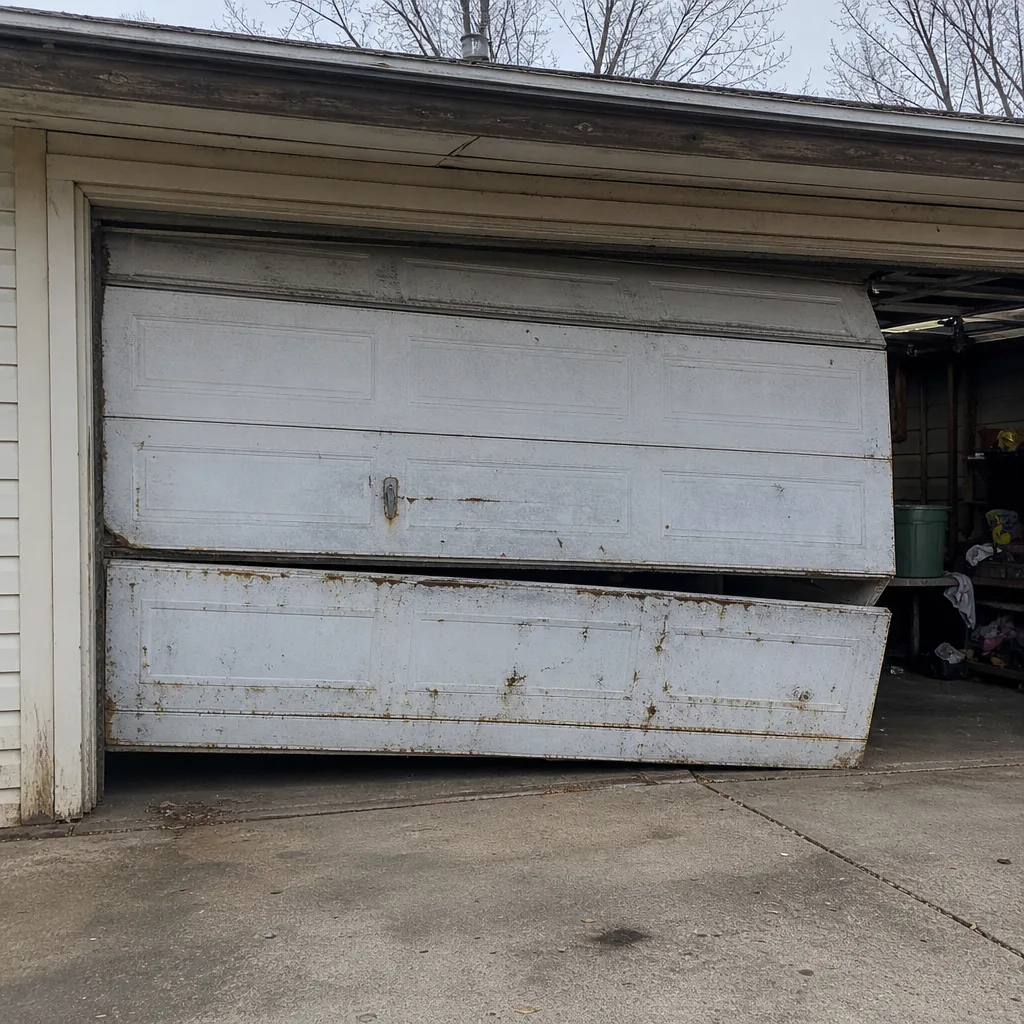 Before
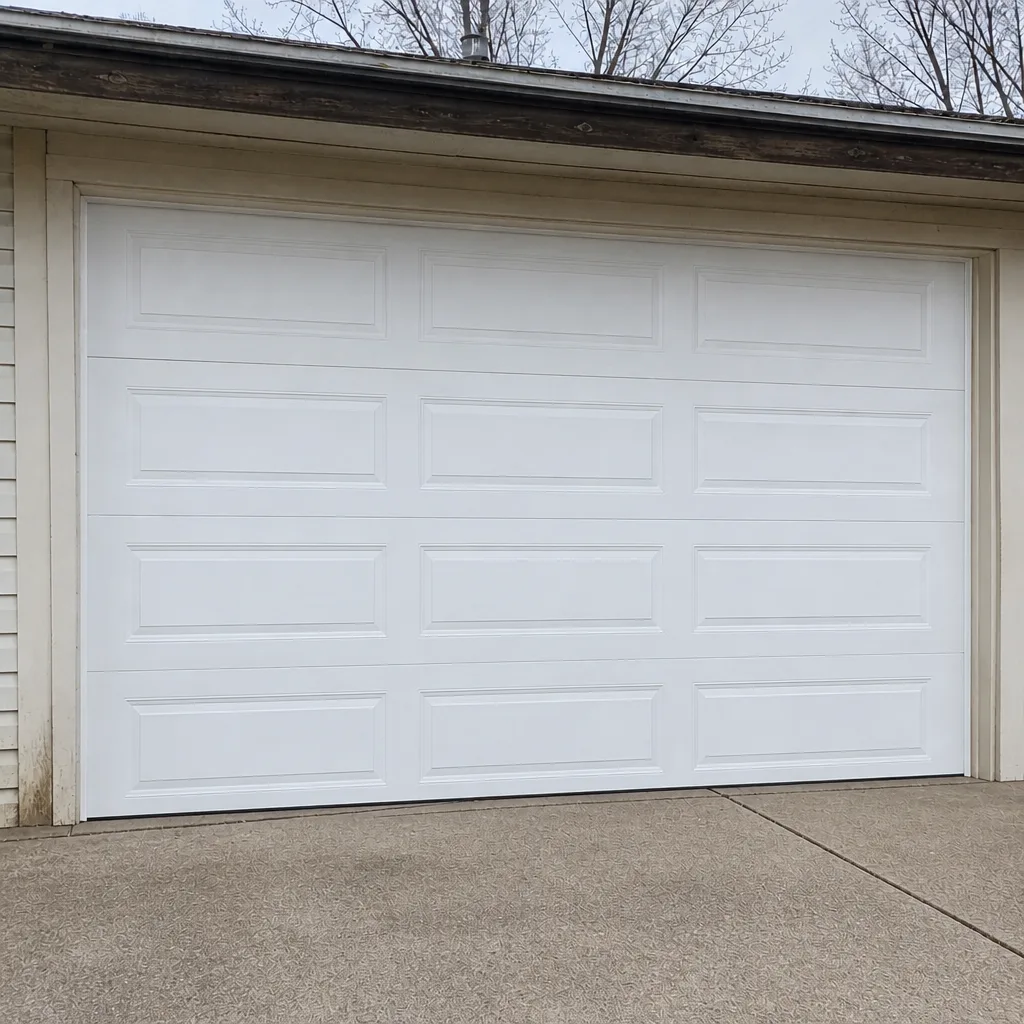 After
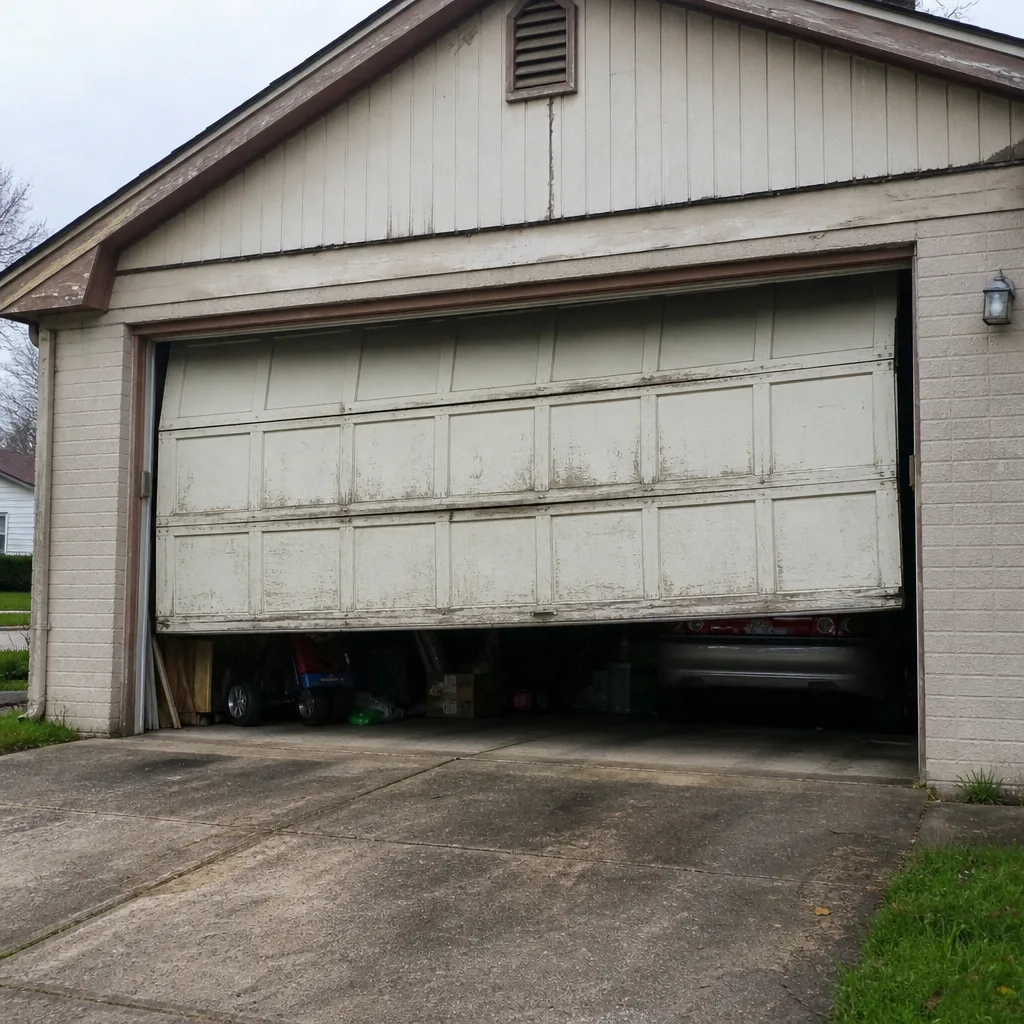 Before
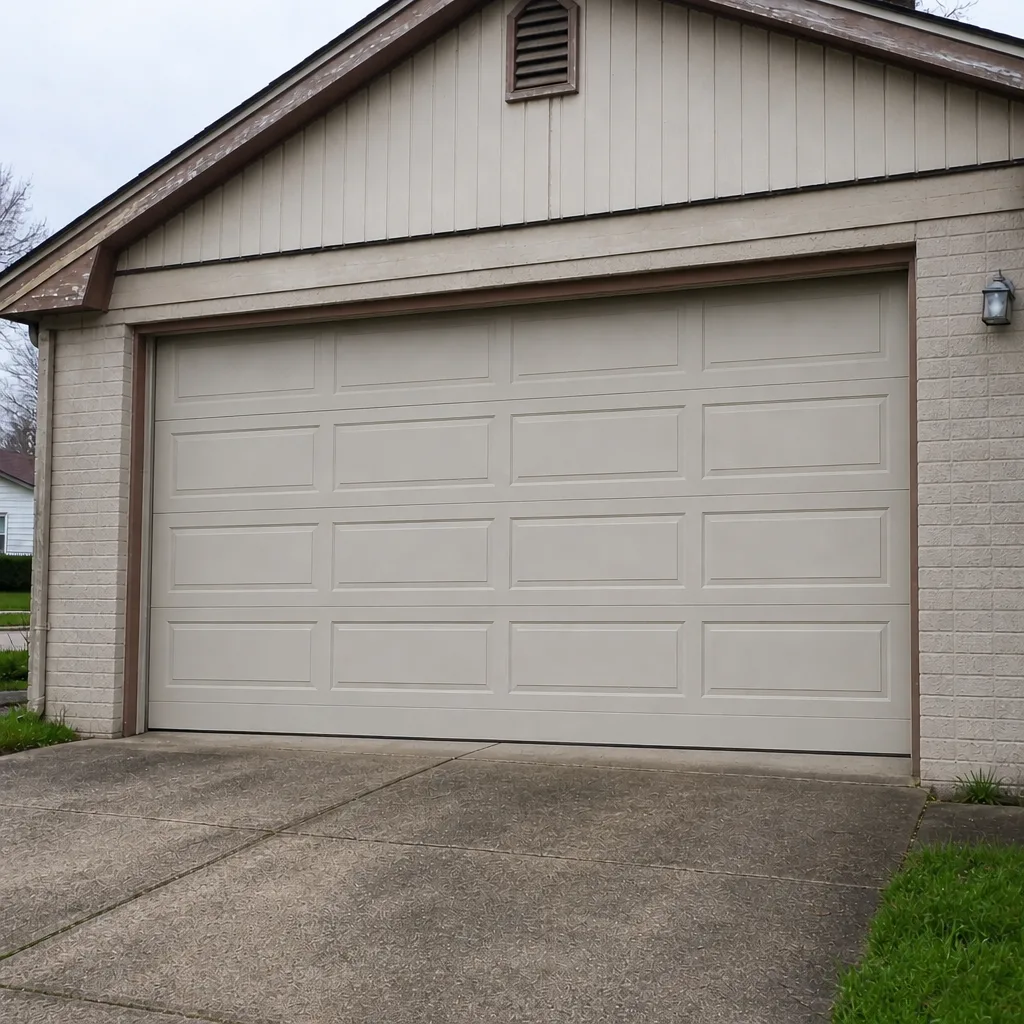 After
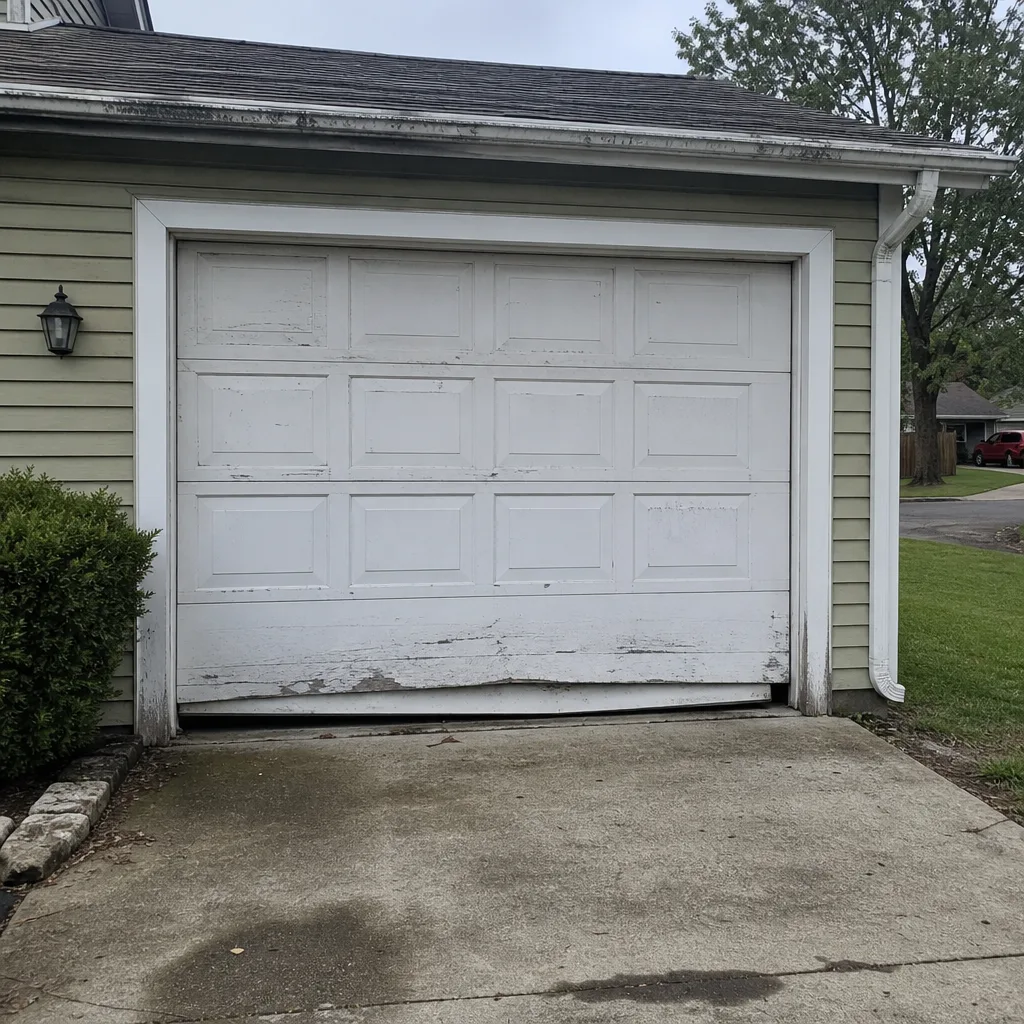 Before
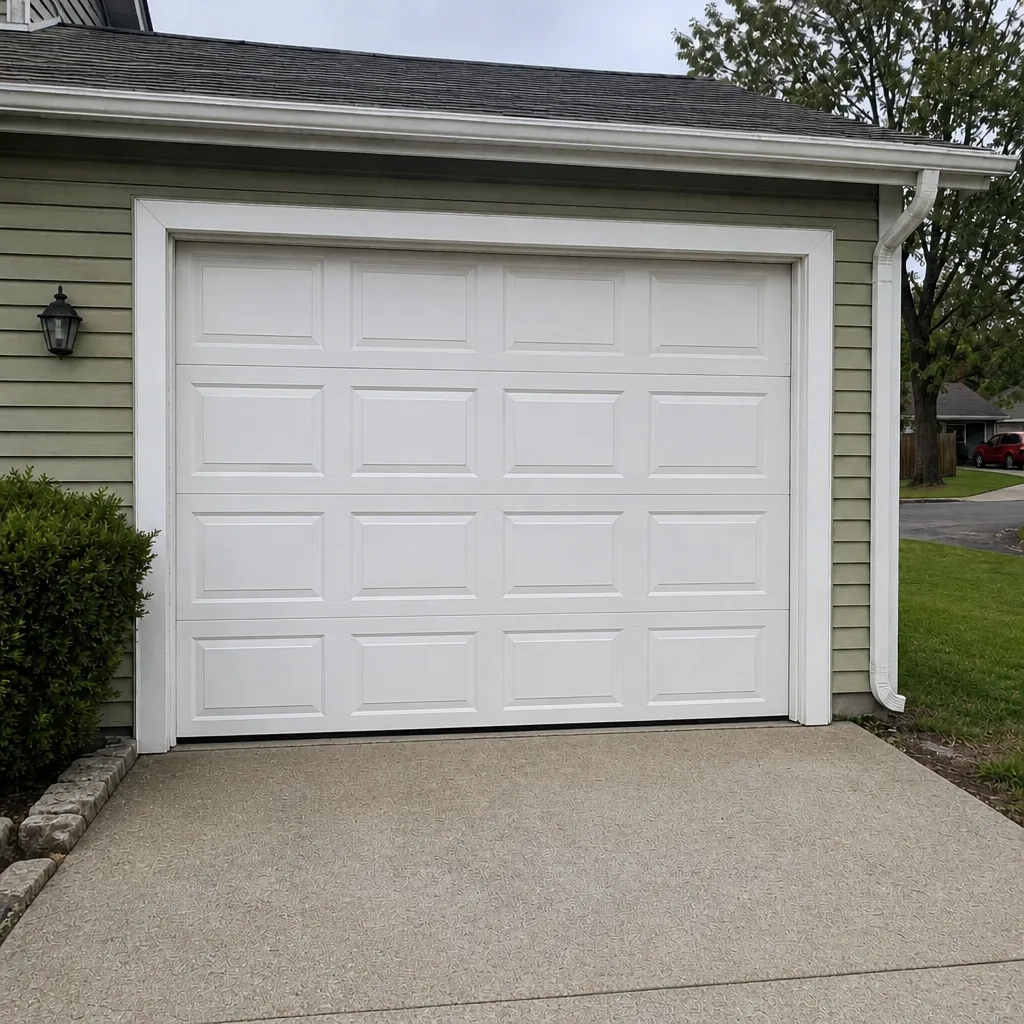 After
Common Mistakes to Avoid
- Buying the winding bars and assuming the tool is the safety system. It isn’t. The safety comes from knowing the load, the number of turns, and the release point. A tool doesn’t replace that knowledge and can create false confidence.
- Prying a bent track back with a hammer. This is one of the most common homeowner mistakes and one of the most likely to shift the door’s balance. A bent track is a professional fix, not a leverage problem.
- Spraying any lubricant on the springs or the tracks. Lubricant belongs on hinges, rollers, and the opener’s drive. Greasing a track or a wound spring attracts grit and does nothing to solve the actual problem.
- Ignoring a frayed cable because the door still works. A cable that’s showing wear is a sign the spring has already lost some balance. The door working today doesn’t mean it will open tomorrow, and a failing cable is a safety issue when it lets go.
- Replacing a panel without checking the spring balance. An incorrectly seated panel strains the hinges and the opener, and it can look fine for weeks before it fails. In a Huber Heights summer, the heat expands the door and masks a bad fit until the first cold snap.
- Skipping the written estimate before a big DIY job. The estimate is free, and knowing the professional number is the best way to decide whether the DIY route actually saves money after parts and risk are counted.
- Forgetting to document what you replaced. If you do a safe DIY repair, keep the receipt and note the date. If the door is ever inspected or sold with the house, that record answers the “who did the work” question.
Frequently Asked Questions
It’s worth it only for weatherstripping, lubrication, sensor alignment, remote programming, and visual inspection. Those jobs are cheap, low-risk, and don’t touch the spring system. Anything involving the torsion spring, cables, track straightening, or structural panel replacement is not worth the risk, because the stored energy and the liability fall on whoever did the work. When in doubt, a free estimate costs you nothing and answers the question.
Torsion spring replacement is the most dangerous, followed closely by cable replacement. Both involve components under high tension, and both can release suddenly if the correct winding and release sequence isn’t followed. The tool isn’t what keeps you safe; understanding the load is. Call (877) 492-2032 for a free estimate before touching either.
It can. When a homeowner-installed system causes property damage or injury, your insurer will ask who performed the work, and the answer changes how the claim is handled. A professional repair leaves a written record that answers that question, which matters for both insurance and a future home sale. A local pro is licensed and insured as Ohio requires, so the liability sits with the person who did the work. Call us for an exact estimate and a written record of the job.
Repair pricing in Huber Heights is set per job by a written estimate, and the estimate is free. The range depends on the part and the number of parts replaced, whether it’s one spring or a matched pair, and whether the opener is involved. We can work with your insurer on claims that qualify, and the price is quoted and agreed before any work starts. Call (877) 492-2032 for an exact quote.
The written estimate is the price. If the technician finds something the description didn’t cover, you hear about it before any work continues, and you decide whether to go ahead. There’s no invoice surprise after the job is done. Call (877) 492-2032 for a free estimate and a written number.
Yes. Same-day and emergency service is a core part of what we do, and we answer 24/7. A call outside dispatch hours is booked into the next opening, Sunday through Friday, 7am to 7pm. If the door is stuck open tonight, call and we’ll get you on the schedule. The price is still set by the written estimate. Call (877) 492-2032.
The Bottom Line
The DIY-versus-professional question on a garage door isn’t about skill. It’s about which tasks carry physical risk or liability exposure, and which ones are straightforward enough to handle yourself. Weatherstripping, lubrication, sensor alignment, and remote programming belong in the DIY pile. Torsion springs, cable drums, track work, and structural panels belong with a trained technician, because the stored energy and the insurance question both fall on whoever performed the work. A free estimate in Huber Heights lets you compare the real cost before you decide. If the door is on the never-DIY list, the smart move is the phone. Call (877) 492-2032 for a free estimate. We answer 24/7, with fast dispatch from 7am to 7pm, Sunday through Friday.
Written by the team at Garage Door Repair Huber Heights.